

Three summer signings that have gone under the radar (Summer 2026 edition - Part 1)
Different title, same concept, we are so back! Also, I lied in the title, there are actually FOUR summer signings in this edition.
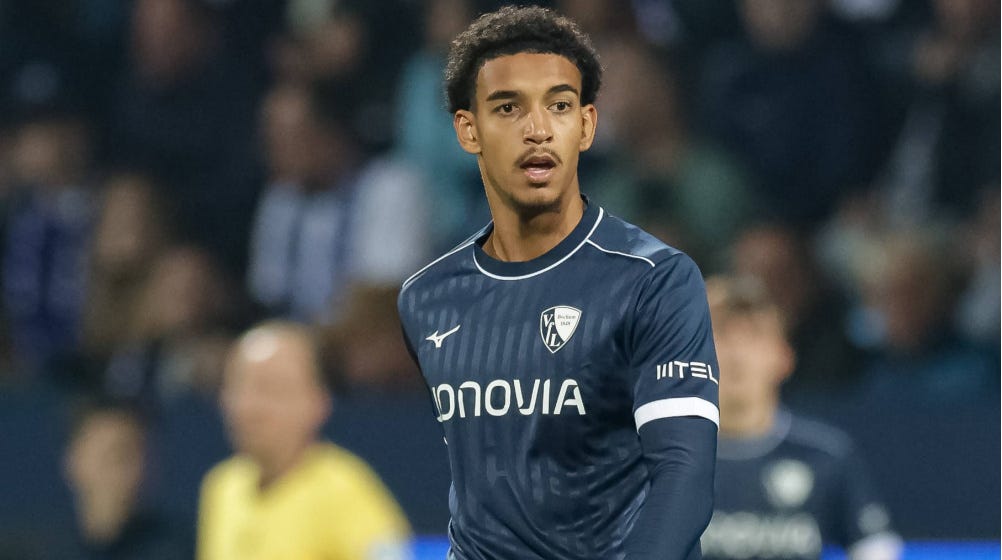
It has been more than a year since I first started this little series where I look into summer transfers that do not receive enough attention (in my own opinion). This is something that I personally do quite often during transfer windows, go onto Fotmob’s Transfer Centre and look at all of the transfers that take place overnight, then research about the ones that are intriguing to me. This series was created as a result of that, as a way for me to organise the knowledge that I know about some players, use data to analyse their performance in past seasons, and theorise about how they will fit into their new team tactically. The only difference is instead of doing it in my own head, I am writing down the thoughts and notes that I have into an article. I guess my one hope is that these notes are helpful and entertaining to read in some ways.
With the World Cup currently taking place as of writing, most of the attention are on the global stage as plenty of analysis and scouting being done for those matches. That means there is even less attention on the current summer transfer window and more transfers going under the radar, which is where I hope this series will be helpful as a way to quickly catch up with some of the activities that are happening in the transfer window, then go back to watching World Cup matches.
For this edition, the focus is once again on transfers between German clubs, mainly because of one reason: German clubs tend to start their transfer business very early and way earlier than most European clubs, so a lot of domestic transfers and a few foreign transfers happen in early- and mid-June. With that in mind, I have picked four transfers to cover in this return edition for this series!
Notes: All stats and data used in this article and series are from Fotmob/Opta unless stated otherwise. I also used Sofascore stats as well for cross-checking and comparison purposes only.
Isac Lidberg
(Darmstadt → Mönchengladbach)
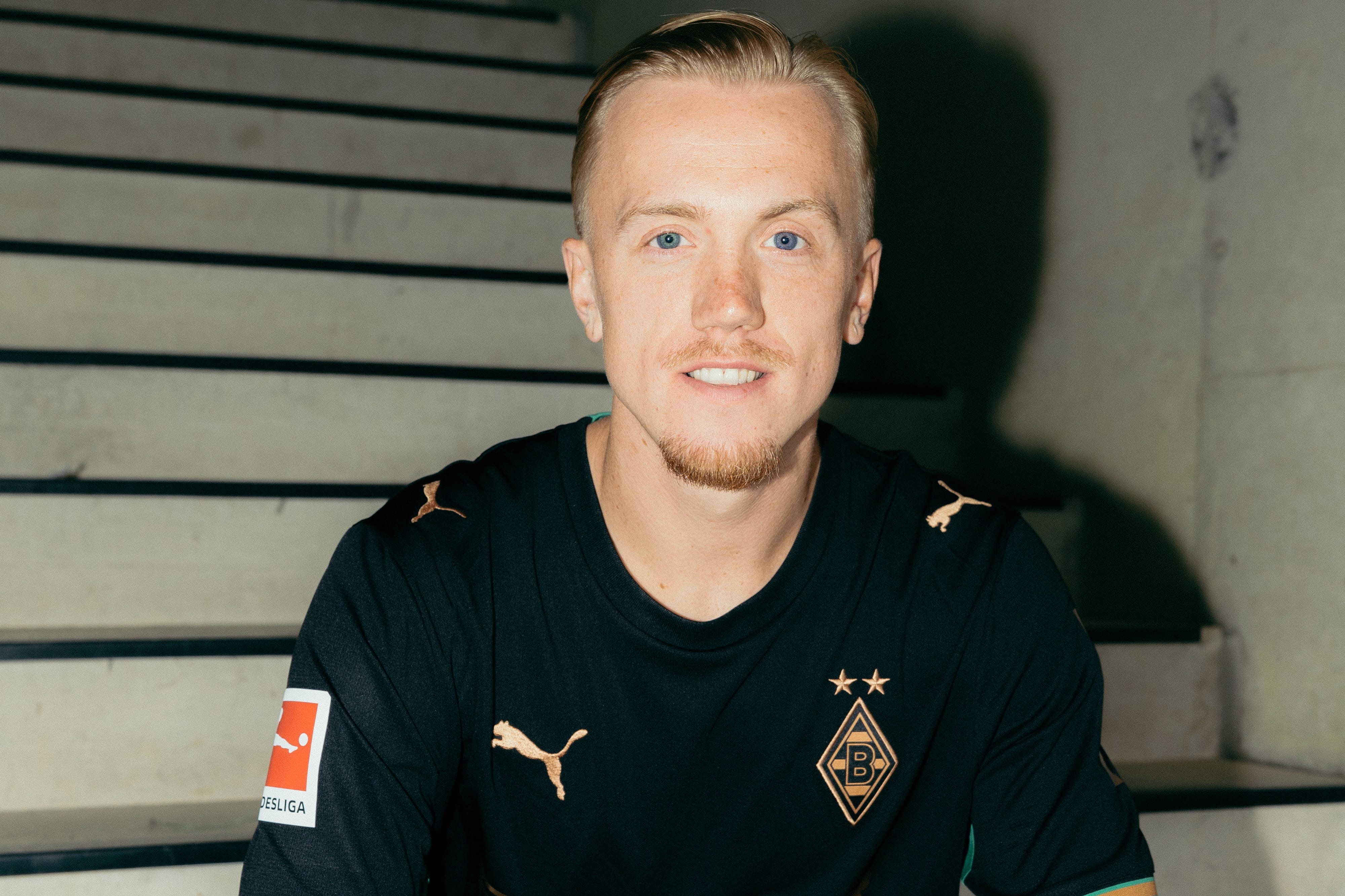
Last season was not a season that Mönchengladbach would want to look back on. They struggled at the beginning of the season and found themselves in a relegation battle, but they slowly regained their footing under Eugen Polanski and finished the season in 12th, albeit just nine points off the relegation playoff spot. Polanski experimented with different formations throughout the season, which explained the inconsistency in their form and prevented them from pushing into the top half and challenged for a European spot.
Another reason that contributed to Gladbach’s struggle last season was their inability to score goals as they finished the season with just 42 goals, the fifth-least in the league, and the total expected goals of 42.8 xG, the fourth lowest in the league. A meniscus injury restricted their main goalscorer Tim Kleindienst to just 10 total minutes played last season and Shūto Machino found it hard to adapt after moving to Borussia-Park from Holstein Kiel. This meant the goal-scoring responsibility fell on the shoulder of Haris Tabaković and the Bosnian striker truly delivered as he finished the season with 13 goals, eight more than the second-best goalscorer in Gladbach’s squad, centre-back Kevin Diks, who scored four of his five goals from the penalty spot.
Since Kleindienst is getting into their early-30s, there is no guarantee that he can be consistent and he is also more vulnerable to injuries. Meanwhile, Tabaković’s future is undetermined as Gladbach have not signed him permanently from Hoffenheim as of writing. As such, the need for Gladbach to find a long-term goalscorer is evident, which is where Darmstadt’s Isac Lidberg comes in. The Swedish striker arrived at Borussia-Park after two prolific seasons where he scored 32 goals across 64 appearances, a record that Gladbach gladly need to improve their goalscoring form. Darmstadt’s inconsistency on the pitch meant they never emerged as a major contender for a promotion spot in their past two seasons under Florian Kohfeldt, but Lidberg and Fraser Hornby (signed for Wolfsburg) kept the team competitive with their goals and both have earned a move to the Bundesliga during this window.
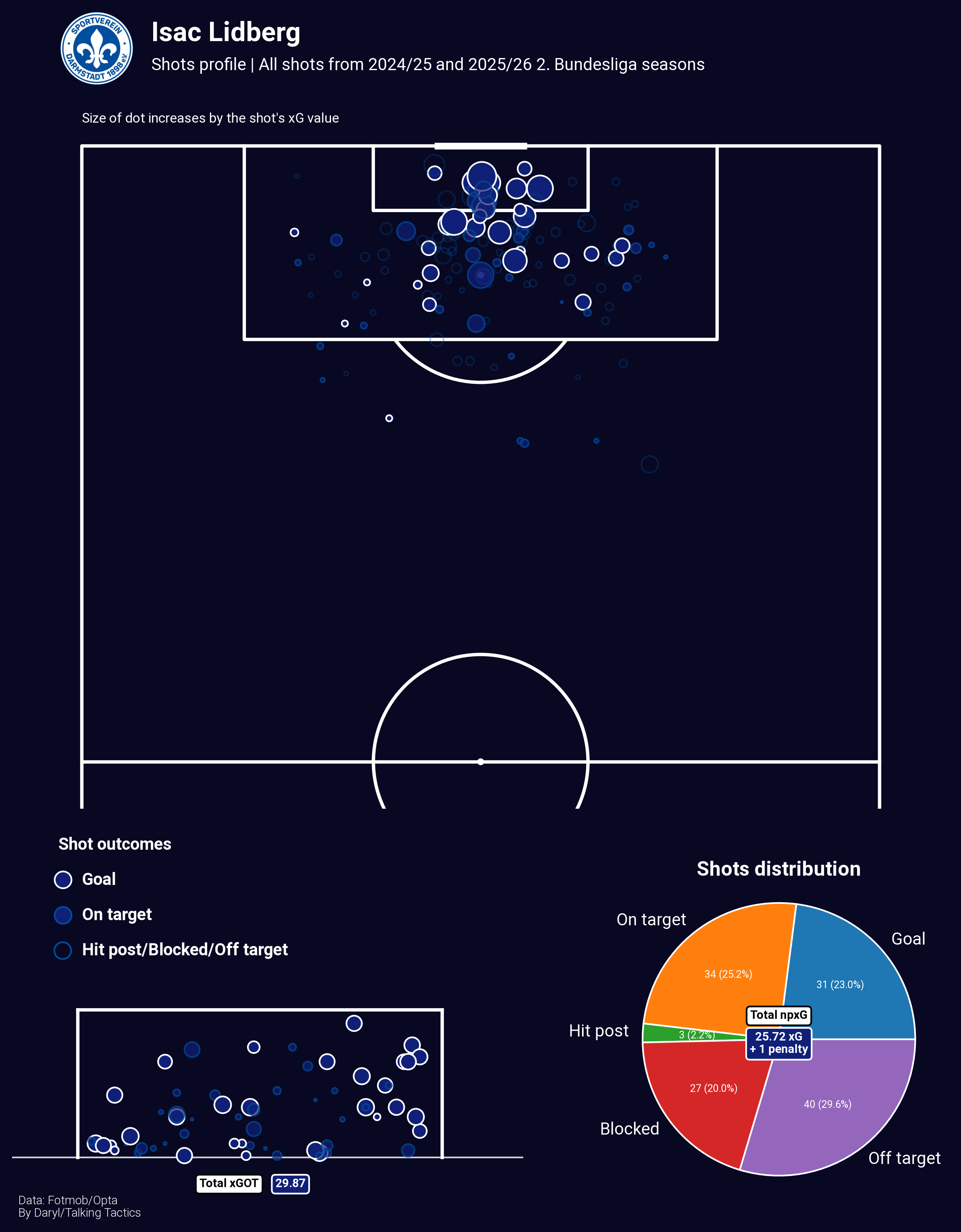
Lidberg is as classic of a poacher as one can be, which can be seen from a few of his goals for Darmstadt. He was very good at anticipating where the ball would be and positioning himself in the right space to capitalise on errors by the opposition defenders and keeper. This allowed him to constantly pick up scraps from inside of the box and turned most of those errors and rebounds into crucial goals for Darmstadt.
Making the step up to the Bundesliga means there will be less rebounds for Lidberg to capitalise on as teams and players in the top division make less mistakes and errors compared to 2. Bundesliga teams. But the Swedish striker can continue to utilise his anticipation and positioning to sit on the shoulder of opposition defenders, where he can receive through balls and attack the space behind the last defensive line. Since Gladbach have plenty of creative midfielders and wide players like Kevin Stöger, Robin Hack, and Joe Scally, this will play into one of Lidberg’s preferred playing style and give the Swedish striker more and better goal-scoring opportunities.
Besides from playing as a poacher, Lidberg can also drop deep to receive the ball from midfielders and use his pace and technical ability to take on opposition defenders, which he had done so for a few goals that he scored for Darmstadt. This was where his partnership with Fraser Hornby came in handy. Both players would often swap position with each other, which allowed Lidberg to receive the ball in between the opposition’s defensive lines and dribbled at them, while Hornby would make a forward run and attempt to push the defensive line back towards their own goal to create space for his teammate.
Should Polanski opt to continue with the 3-4-2-1 and 3-5-2 formations moving into his first full season with Gladbach, Lidberg will find himself receiving plenty of assistance from teammates behind and around him. It is also possible for the Swedish striker to form a close striker relationship similar to his relationship with Hornby at Darmstadt if Kleindienst can get back to full fitness and start up front in Polanski’s 3-5-2. Kleindienst can play as a target man to receive passes from midfield and hold up the opposition defenders, thus creating space for Lidberg to capitalise on and run in behind.
Since Gladbach have not signed both Tabaković and Alejo Sarco on a permanent basis, they are heading into pre-season with three striker options in Kleindienst, Machino, and Lidberg, at least at the time of writing. As mentioned earlier, Kleindienst’s fitness is still questionable given that he has been out for the entirety of the 2025-26 season due to a serious injury, which means the German international will need a bit of time to get back to his best. Machino is currently at the World Cup with Japan after being called up late and will likely join pre-season later than most of his Gladbach teammates. That leaves Lidberg with the opportunity to impress during pre-season, earn himself the starting spot in the opening matches of the new season, and solve Gladbach’s goalscoring woes that prevented them from breaking into the group that challenge for European football last season.
Sean Đulić
(1860 München → Hoffenheim)
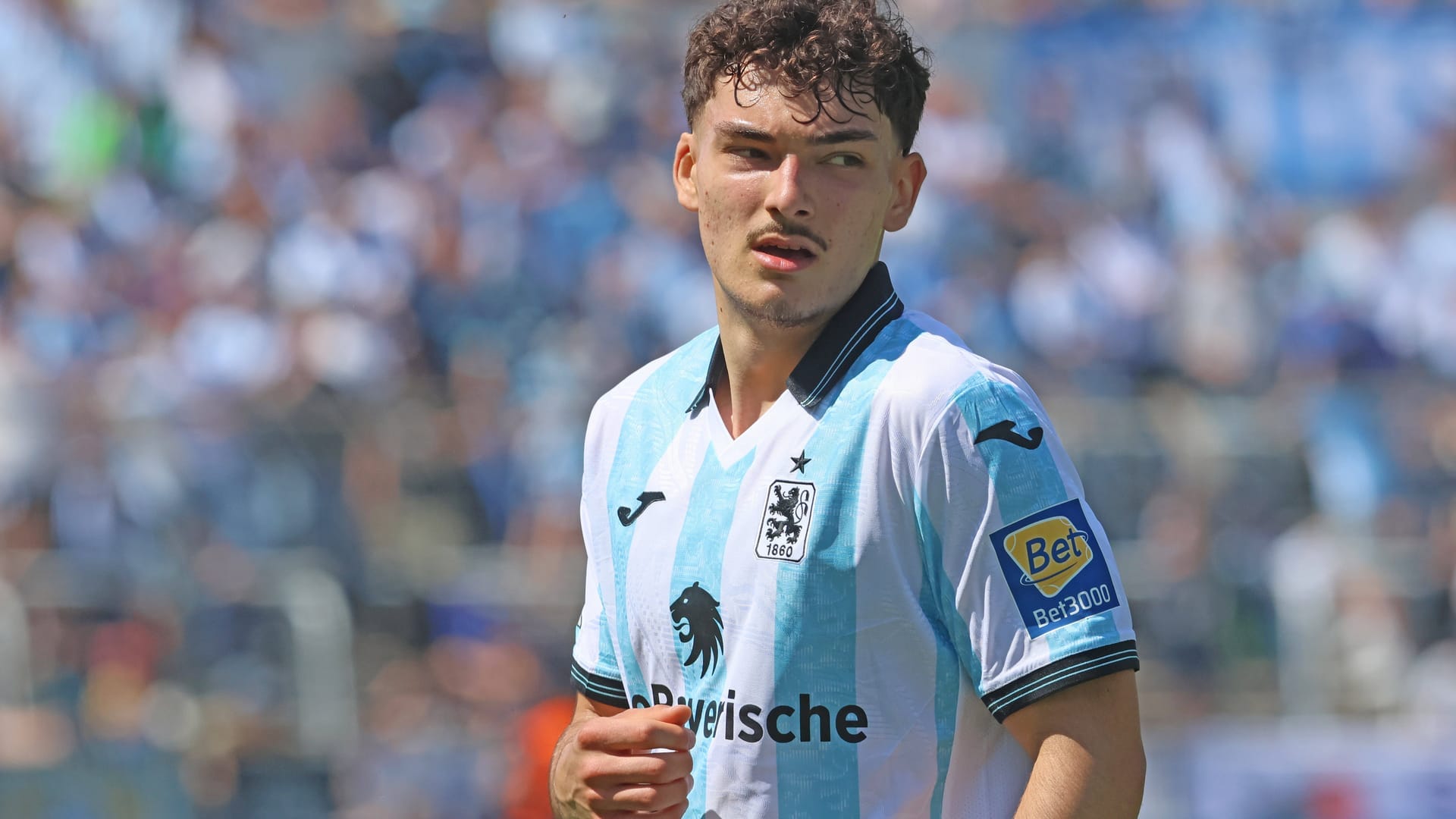
It has only been a few weeks into the 2026 summer window, but Hoffenheim are already emerging as one of the heavy and aggressive spenders of the window. Despite the fact that they will be playing in the Europa League next season, they still choose to stick with the recruitment philosophy that was the foundation for their rejuvenation last season, which is signing young and promising players for a low fee. Die Kraichgauer have already secured the signature of promising striker Alessandro Vogt from St. Gallen back in March and have moved quickly to sign young midfielder Cajetan Lenz from Bochum for an undisclosed fee in May. Their spending continues into June as they snapped up full-back Mats Rots from Twente and winger Patrick Wimmer from Wolfsburg for a total transfer fee of €22m.
But probably one of Hoffenheim’s bargains of this window is picking up 20-year-old Sean Đulić from 1860 München on a free transfer. 1860 have produced promising academy graduates in the past and they are still continuing that tradition in recent years, with the cream of their current crop being Đulić himself, versatile player Clemens Lippmann, current Greuther Fürth full-back Lukas Reich, and winger Emre Erdoğan. Despite that, they have found it hard to get out of the 3. Liga in recent seasons and their financial instability off the pitch have not made that task any easier. Things have turned worse for 1860 München as they have been relegated down to the Regionalliga (4th tier) because they are unable to obtain the license to continue playing in the 3. Liga (3rd tier). This has forced the club into a fire sale with many players leaving on a free, including Lippmann to newly-promoted Bundesliga side SC Paderborn and Đulić to Hoffenheim.
What Hoffenheim are getting from Đulić is a young talent with plenty of potential and rooms to grow, which definitely fits the recruitment philosophy that the club are aiming to maintain. The 20-year-old player broke into 1860’s first team last season and have since accumulated a total of 43 matches played for his local club in all competitions, which should make the step up from the 3. Liga a bit easier to handle. Đulić, along with Cajetan Lenz, is most likely signed to address Hoffenheim’s lack of depth in midfield after Grischa Prömel joined Stuttgart on a free transfer and Leon Avdullahu attracting interest from elsewhere. Đulić can also play as a centre-back and have done so for 1860 München in the past two seasons, but since Hoffenheim already have 6 centre-backs on their books, including Kōki Machida returning from an ACL injury and Arthur Chaves returning from his loan spell at Augsburg, it is unlikely that Đulić will get too much game time as a centre-back.
Throughout last season, Đulić was used as a right-sided centre-back in 1860’s back three and usually took on the role of a ball-playing defender when his team were in control of possession. While his passing stats look fairly impressive, this is where the illusion of data can lead to false assumptions. After watching a few of 1860 München’s matches from last season that are available to view on YouTube, I thought Đulić was a fairly safe passer as a lot of his passes were sent backwards to the keeper or sideways to one of the centre-backs. He also linked up with the midfielders with some passes, which allowed either Đulić himself or one of the central midfielders to make overlapping runs into the opposition’s half.
But in contrast to my initial assumption that Đulić was a progressive passer, he definitely needs to be braver and needs more encouragement to look for teammates higher up the pitch. That is not to say that he cannot make forward and progressive passes because there were a few occasions where his long passes from the back led to goal-scoring chances for his teammates. At a higher and better playing environment like Hoffenheim, however, Đulić can definitely learn from his new teammates who are more comfortable with the ball, which will help him be braver with his passes.
Another aspect that Đulić can improve during his time at Hoffenheim is his defending style even though it is already decent, but there are definitely rooms for improvement. Although Đulić was quite aggressive in marking the opposition player and challenging for the ball, it was rare to see the German-Bosnian defender diving in for a tackle. One reason for that is because he did not look very strong physically when making challenges, which allowed the opposition player to get the better of him on a few occasions. He also did not engage in and win plenty of aerial challenges despite being 187cm tall, which is a weakness that can be easily exposed at a high-quality league like the Bundesliga.
As mentioned earlier, Đulić is a diamond in the rough that Hoffenheim have picked up. His performance for 1860 München was not bad, but he also received a lot of support from more experienced defenders and midfielders around him. It is also worth remembering that Đulić is just 20 years old and is entering his third professional season. Joining Hoffenheim will give him plenty of opportunities to learn from better players and in a more challenging environment, which will do him good for his long-term career. I do not expect Đulić to be a first team player straight away, but the bigger question is how will his time be divided between Hoffenheim’s first team and B team next season considering their B team will also be playing in the third division, where he can continue to get regular game time while also learning from first team players?
Francis Onyeka
(Leverkusen → Elversberg - on loan)
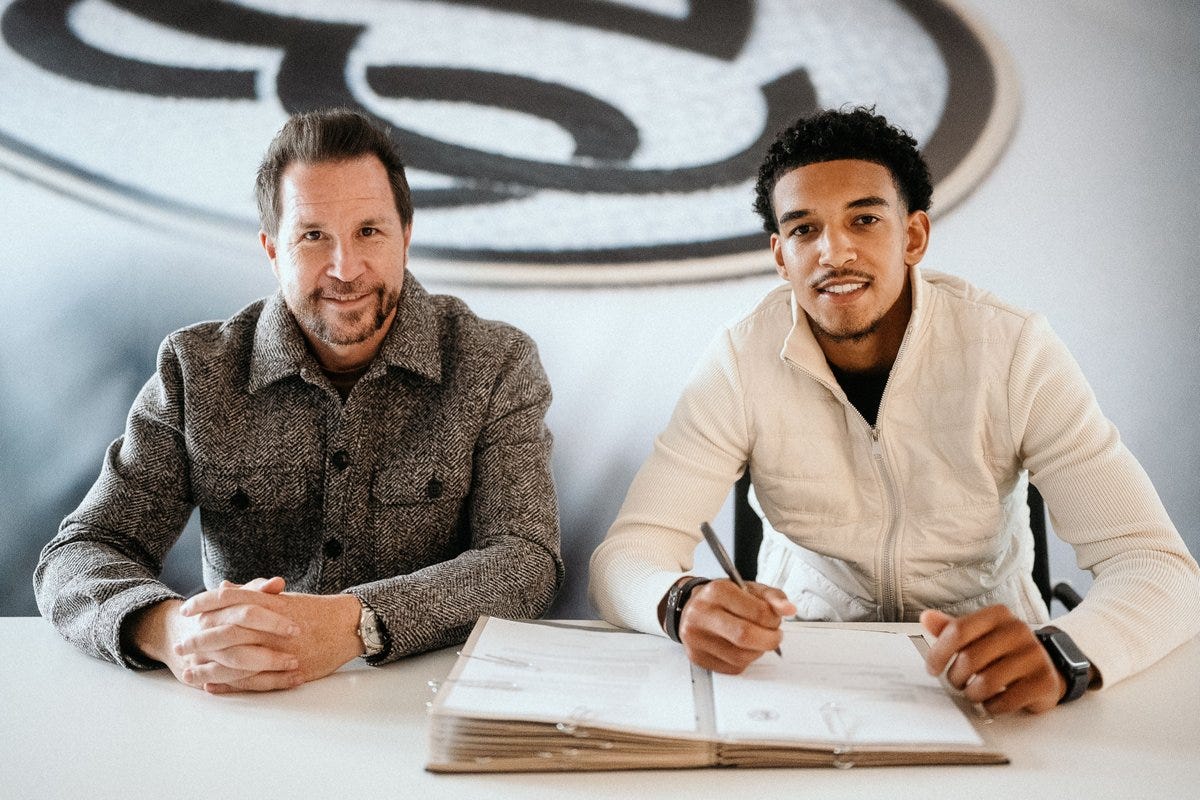
Elversberg have been a feel-good story of the 2. Bundesliga in the past few seasons. They have only secured promotion to the 3. Liga in 2022, but under Horst Steffen, the club have gone from strength to strength as they won the 3. Liga on their first attempt and reached the 2. Bundesliga in 2023. Just two seasons later, they came very close to the promise land but fell short in the promotion/relegation playoff against Heidenheim. Even with a managerial change as Vincent Wagner stepped in to replace Steffen, Elversberg’s momentum did not stop there as they did one better than last season and secured promotion to the Bundesliga as runners-up.
It is evident that Elversberg have been punching above their weights since their budget is considerably smaller than most clubs in the 2. Bundesliga and significantly smaller than most Bundesliga clubs. While that is an impressive feat for a club that were in the fourth division not long ago, the reality is the Bundesliga is a much more challenging and unforgiving league. Recent seasons have been extremely tough for clubs that were promoted from the second division as most clubs could only survive for at most 3 seasons then have to go back down. This includes clubs that have invested heavily in their playing squad like St. Pauli, Bochum, and Heidenheim as all three have suffered relegation just a few seasons after they were promoted. If Elversberg want to give themselves a chance to survive next season and beyond, the first thing that they have to get right is recruiting players to improve their squad.
As of writing, the club have signed two promising attacking midfielders to bolster their attacking options. Maurice Krattenmacher, who arrived from Bayern München, will likely be a depth option as he adapts to the Bundesliga after spending two average seasons on loan at Ulm and Hertha Berlin respectively. Meanwhile, after scoring 8 goals on loan at Bochum, Francis Onyeka was rewarded with a new contract with Bayer Leverkusen and then sent out on loan to Elversberg for his first full season in the top flight. Onyeka is part of Leverkusen’s current crop of promising youngsters that includes wing-back Montrell Culbreath, attacking midfielder Kerim Alajbegović, and striker Artem Stepanov, a group in which the club have a lot of faith to lead them into the future. While Culbreath and Alajbegović are seen as ready for the first team, Onyeka and Stepanov require more game time and have been sent out on loan, which Elversberg and Utrecht will happily welcome their reinforcement respectively.
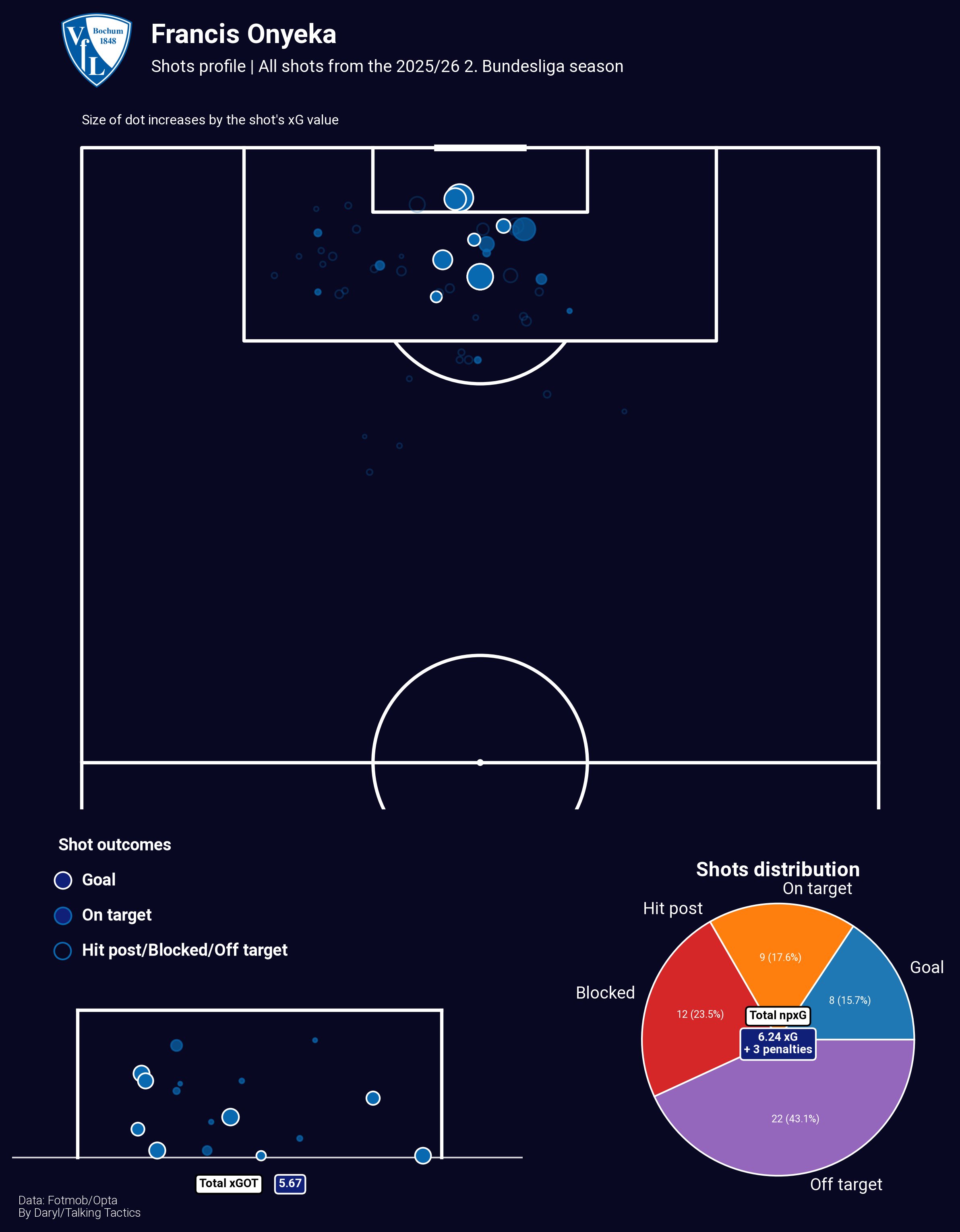
During his loan season with Bochum, Onyeka was used in his natural position as the attacking midfielder in their 4-2-3-1 formation. While one might assume that means the German youth international is a playmaker, that assumption is quite wrong just through his stats. Just like Darmstadt’s Fraser Hornby that was discussed earlier, Onyeka is a second striker who has a very sharp eye for goals. Playing behind a target man like Philipp Hofmann allowed Onyeka to crash the box with his forward runs or even utilise the spaces that Hofmann created by dragging defenders out of their position for Onyeka to dribble the ball into.
Even though he comes across as a tall player (187cm) and looks to be a decent fit as a target man, Onyeka is very good at dribbling and controlling the ball, which suits him better as a second striker/attacking midfielder. His ability to keep the ball close to himself while dribbling makes it harder for the opposition player to dive in for a tackle without conceding a foul. He is also quick both on and off the ball, allowing him to leave the opposition defenders behind while attacking the channels or the space in behind the last defensive line. His height advantage also comes in handy as his late runs into the box allows Onyeka to be at the end of crosses and score a few headed goals (5 headed goals in particular for Bochum last season).
There was a sense of coolness and calmness in the way that Onyeka played for Bochum last season despite the fact that he only turned 19 in April. A lot of his movements on and off the ball felt relaxed and confident, like a young player who enjoyed every moment that he stepped foot onto the pitch. That confidence also carried over to his penalty taking, where he scored three of his eight goals last season. He knew where he wanted to place the ball, and while the run-up felt a bit unnecessary with the stuttering, he usually placed the ball into low corners and made them hard to save. It was also the approach that Onyeka used for his shots, which can be seen on the goalmouth at the bottom left of the visualisation above. His preference to place shots low but with a bit more power prevented the opposition keepers from reacting quick enough to save his shots.
With all of those praises, it does not mean that Onyeka is a complete package of a player. The German youth international is not a creative player and does not create chances for other teammates very often. The fact that he only registered 0.04 assists per 90 from 0.04 expected assists per 90, along with less than 1 chances created per 90, is absurdly low for a player who is playing in the #10 position. This means he will have to rely on other teammates around him to create goal-scoring chances that he can capitalise on, which Elversberg will have a few in the form of their full-backs, midfielders, and wingers. One good thing about Elversberg’s squad is that chances can be created by pretty much anyone in the squad, which means Onyeka will not be short of opportunities to score goals.
Another aspect that Onyeka will need to improve is his defensive ability, especially when it is expected that Elversberg will be doing a lot of defending next season against teams that will likely be dominating possession for the majority of the match. Last season, Bochum were not a team who pressed aggressively as they only placed 8th (3.7) for possession won inside the final third and relied more on recovering possession from a mid or low block. It meant that Onyeka did not have plenty of defensive work to do last season, but things will be different at Elversberg should Vincent Wagner adopt a more passive playing style due to the lack of possession that they will have. Being able to read the situation and position himself at the right space to intercept passes can be a lethal weapon that both Onyeka and Elversberg can utilise, especially when combining with Onyeka’s dribbling ability to start counter-attacks.
Nonetheless, Onyeka’s arrival will be a major boost to Elversberg’s squad and a good step up from the 2. Bundesliga for the German youth international. He will be a direct replacement for Bambasé Conté as he will be returning to Hoffenheim following the end of his loan spell and Elversberg have not opted to buy him on a permanent basis as of writing this article. Whether we will see the best of Onyeka’s ability will also rely on which playing style will Vincent Wagner adopt next season, but getting game time in the top flight will boost Onyeka’s development by a whole lot for him to return to Leverkusen and challenge for a first team spot in the future.
Satoshi Tanaka
(Düsseldorf → Schalke 04)
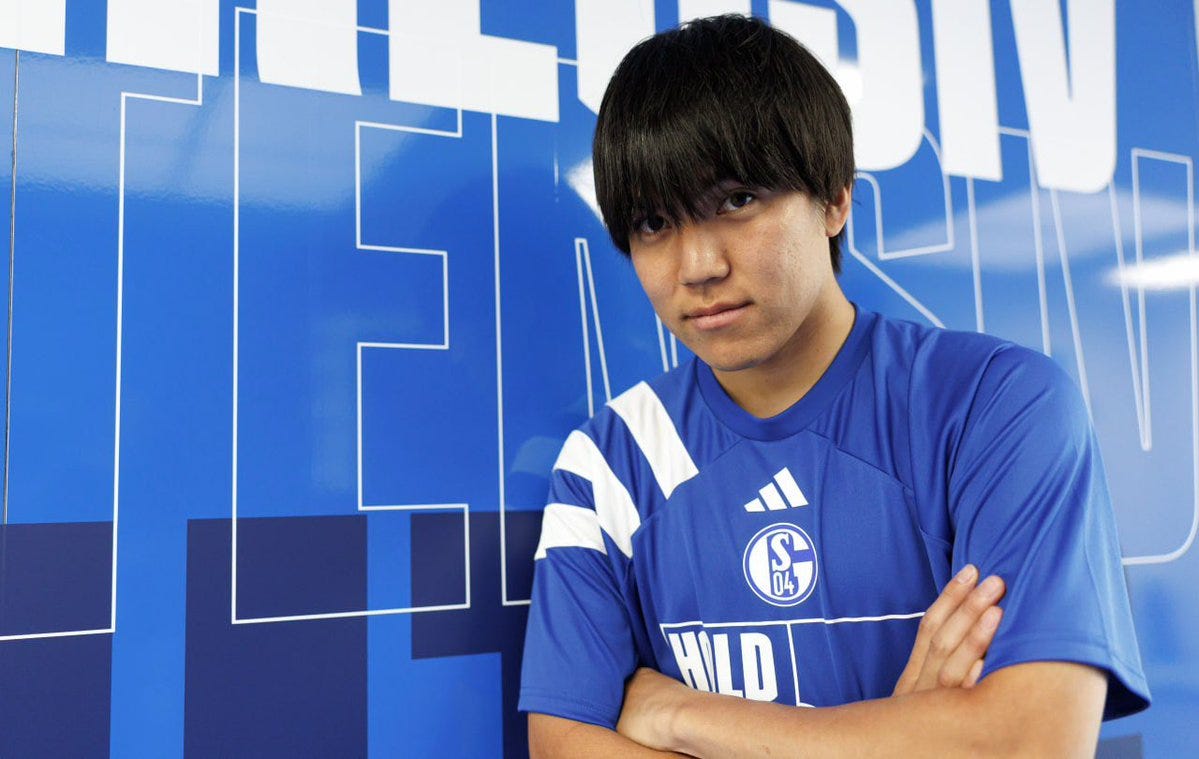
Along with Paderborn and Elversberg, a familiar name will be making a return to the Bundesliga next season after Schalke 04 won the 2. Bundesliga title in a fairly convincing manner. After two struggling season in the second division where they could not even finish in the top half, Miron Muslić was signed from Plymouth Argyle in the Championship and was tasked with getting Schalke back into the top flight, a task in which the Bosnian manager completed at first try.
With a playing style that favoured defensive solidity, Schalke finished last season with just 31 goals conceded from a total of 37.1 xG conceded, lowest in the league for both metrics, while also being prolific at the other end of the pitch, even if they underperformed their goalscoring numbers by a slightly large margin (50 goals scored from a total of 58.2 xG). Muslić has also built a squad with a mix of promising homegrown talents and experienced players, which is headlined by the evergreen striker Edin Džeko, former Liverpool goalkeeper Loris Karius, former Glasgow Rangers centre-back and Bosnian international Nikola Katić, and captain Kenan Karaman.
While their squad depth for most positions seems to be fairly good, there are always rooms to improve the squad quality when the right player comes around, which makes Schalke’s acquisition of Japanese midfielder Satoshi Tanaka from Fortuna Düsseldorf for a mere €1m feels like a bargain. Düsseldorf’s fortune took a significant downturn when Daniel Thioune, who helped the team challenged for a promotion spot in the last three seasons before the 2025-26 season, was sacked in October 2025. Markus Anfang and Alexander Ende came in as his replacements but neither were able to save Düsseldorf from getting relegated to the 3. Liga for the first time since the 2008-09 season. This meant that, while Düsseldorf have only signed Tanaka during the January window, they were forced to sell him for cheap along with others in the squad, allowing the Japanese international to make a move to the Bundesliga with Schalke.
Even though Tanaka only registered just a bit north of 1100 minutes played (or 13 matches played) for Düsseldorf, he still left a huge impression as a defensive midfielder in either a 3-5-2, 3-4-2-1, or a 4-2-3-1 formation that were used at different points of the season. He proved to be an important player in defence for Düsseldorf as he did not shy away from making challenges and tackles to recover possession while not conceding many unnecessary fouls. The Japanese international was also good at positioning himself in the right space and intercepting passes that came his way, which definitely helped kept Düsseldorf alive until the last day of the season.
With the ball, Tanaka also proved to be a prolific dribbler as he is very comfortable with controlling the ball at his feet. His small physical build and pace allowed him to get past the opposition players fairly easily while also drawing a few fouls himself. Those forward runs have also proved to be quite dangerous as it allowed Tanaka to crash the box late for potential rebounds or backpasses to create goal-scoring opportunities. While he did not get the chance to score for Düsseldorf, he has shown that he is capable of scoring goals for both Shonan Bellmare and Sanfrecce Hiroshima in past J1 League seasons.
However, it will be hard to expect Tanaka to be a prolific playmaker from deep. The Japanese midfielder does have an eye to look for forward passing options, but he has not created too many goal-scoring chances for his teammates in the past. In Schalke’s squad, though, that is a responsibility that Tanaka does not need to take on. With the likes of Soufian El-Faouzi, Adil Aouchiche, Kenan Karaman, and Dejan Ljubičić, Schalke have plenty of creative players in the squad that can take care of creating goal-scoring chances to allow Tanaka to focus on protecting the team’s defensive line. But do not be surprised if the Japanese midfielder slowly evolves into a more advanced midfielder throughout next season if creating chances and passing style are two of the aspects that Muslić wants to help Tanaka improve during his time at the Veltins-Arena.
Schalke’s midfield is a group with plenty of talents, quality, and depth, which means it is hard to expect Tanaka to be a regular starter straight away. It is, however, more likely that he will be an understudy to Ron Schallenberg and gain a few opportunities to play here and there. Since Jannik Bachmann is getting into his early-30s and was not used very often last season (412 minutes played), he is most likely going to be a backup option or an injury cover for both Schallenberg and Tanaka. But the need for a player who can be rotated or subbed on for Schallenberg is quite evident since the German midfielder was almost an ever-present for Muslić’s side, and that is where I think Tanaka will slot in while also improving as a player.
In just six months that he spent with Düsseldorf, Tanaka has shown why the Bundesliga and 2. Bundesliga have treated Japanese players so well and provided them a platform to bigger things across Europe. The last Japanese midfielder who came to Düsseldorf left the club after two seasons where he became a fan favourite to join Leeds United in the Premier League, and the name Ao Tanaka is slowly becoming a household name for many fans. The last Japanese player to have played for Schalke also left a fairly decent impression even though Maya Yoshida was not able to help the club survived relegation. Tanaka has also drawn comparisons to Kaishū Sano, who has enjoyed two good seasons with Mainz 05 so far. Nonetheless, he will be in good company as the Japanese contingency in the top two German divisions grows and in an environment where he can develop as a player at Schalke to potentially move on and achieve greater things like most Japanese players that have done so before him.
With that, the first weekly edition of the Transfers Round-up for the 2026 summer window is finally done! It has been good to return to working on articles that I enjoy researching and doing due dilligence for. While I cannot promise to be consistent, I will try my best to keep this series as weekly while the World Cup is taking place as a touch of something different in the midst of a lot of World Cup content. For now, though, thank you for reading if you have reached this point, I really appreciate the support!