

Data Deepdives: AFC U23 Asian Cup - Day 2 + 3
Why did South Korea, Iraq and China fell short of expectations, and what on earth happened between everyone else?
This was intended to be a two-parter where I covered day 2 and 3 of this year’s U23 Asian Cup separately. But due to my own procrastination and the tournament schedule being so ruthless, it was hard for me to keep up with the routine of watching the matches live, stay up at night to write these articles, then still work a normal day job. Not a common problem that most people have, I know!
Nonetheless, this review is going to be a mega one as I try to cover as many matches as I can from day 2 and 3 to make up for lost time. This might also be the format that I do until the end of the tournament, which is doing a single mega review for each round played instead of splitting them up into separate days (thanks for the scheduling, AFC!). I figured this is the best way for me to maintain the quality as is while also not burning myself out and leave myself with no ideas to do after the tournament is finished.
Without further ado, let’s get into the actions that happened in day 2 and 3 of the group stage, shall we?
Note: All data used here are from Opta with the visualisations created by yours truly unless stated otherwise :)
Japan 5-0 Syria
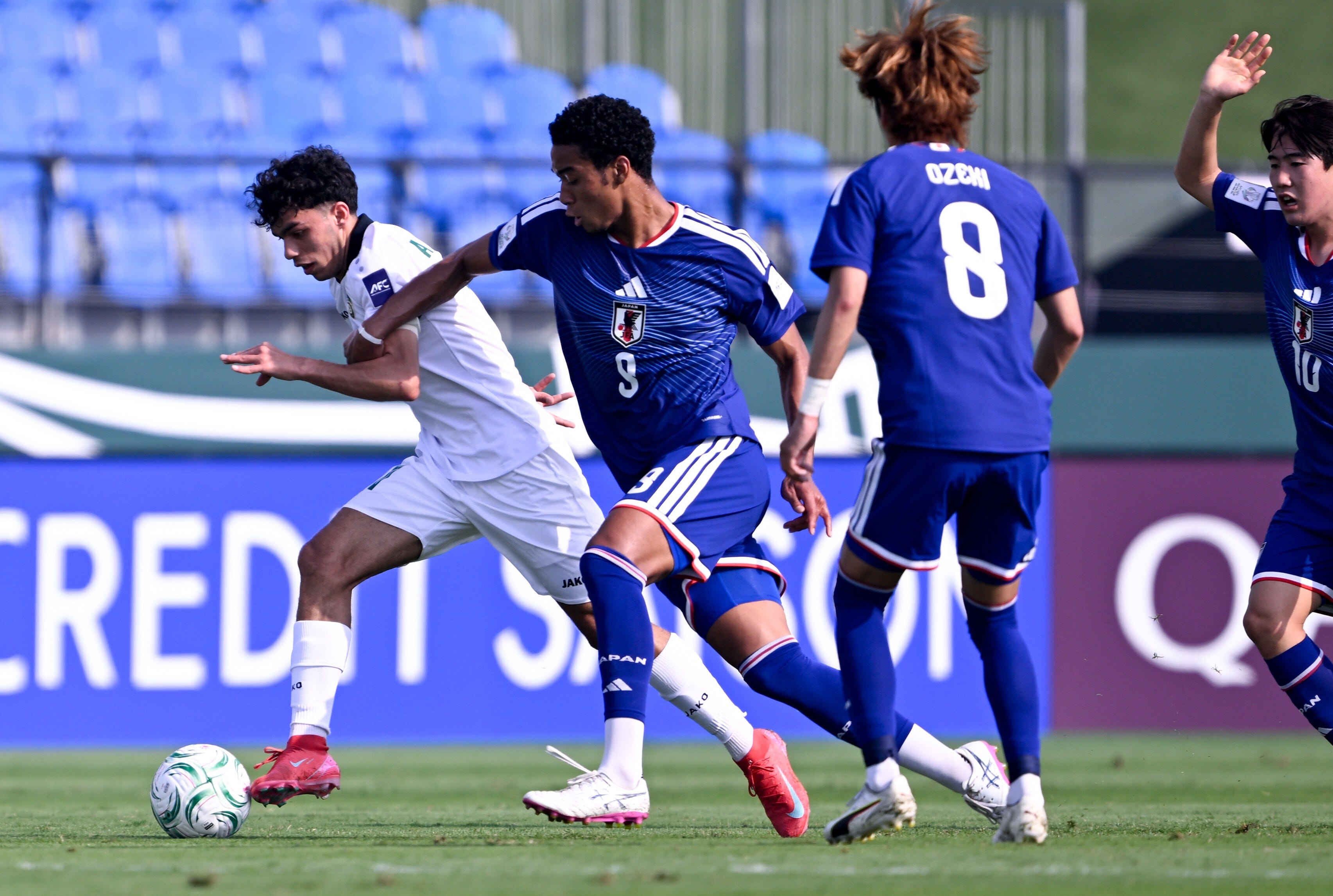
While most people will deduct from the scoreline that Japan delivered an exceptional and dominant performance against Syria, and I don’t disagree with that point, but there is definitely more to the match than at first glance.
One aspect of Japan’s performance that caught my eyes early was how aggressive their high press was as they looked to chase down Syria’s keeper and defenders even inside Syria’s own penalty box. They seemed to press with a clear intention of guiding the opposition to move the ball out wide by using their #10 Ryunosuke Sato pressed Syria’s keeper while #9 Brian Nwadike closed down the nearest Syrian midfielder who dropped deep to offer to receive the ball. This forced the ball to be played wide on several occasions, an area where Japan were able to create overloads in an attempt to regain possession.
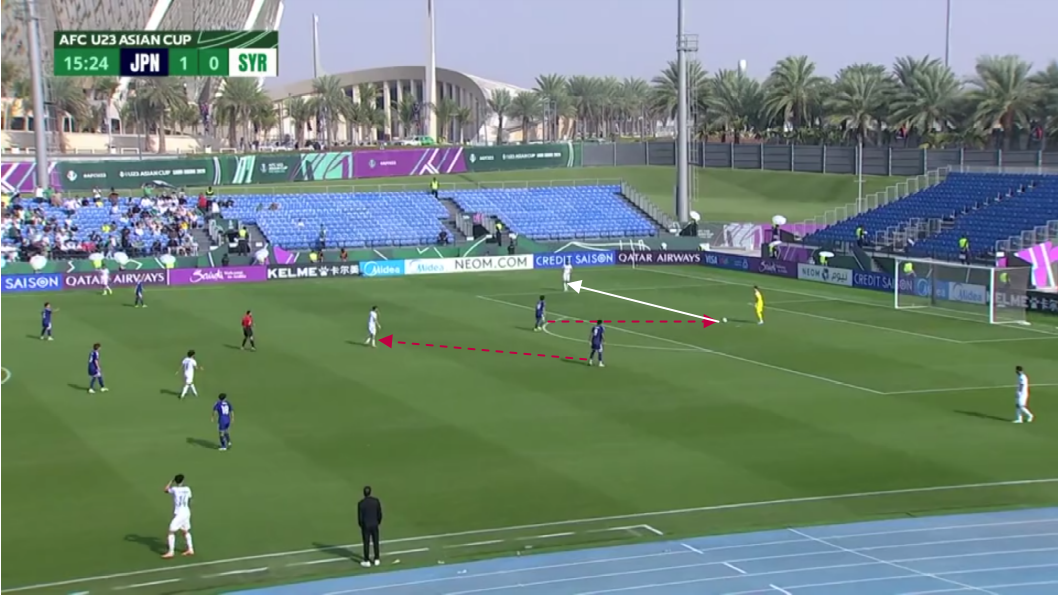
Very minor detail, but Sato’s pressing attempts also played a huge part because he did not run directly at the keeper Maksim Sarraf, which would have left Sarraf with two possible options to pass the ball out. Instead, Sato attacked Sarraf from one side, essentially blocked off that side before approaching the keeper, thus able to guide the ball into the corner where Sato’s teammates were ready to create an overload.
Take the situation above as an example, Sato’s pressing run aimed to block Sarraf’s left-hand side and guided the ball to Sarraf’s right-hand side, which was exactly what the Syrian-Russian keeper did. Also notice how Japan’s left midfielder (#11) Yumeki Yokoyama was already closing Syria’s right-back down, which signaled that they were ready to engage the press on that side of the pitch. The situation did end up with Japan’s left central midfielder (#8) Yuto Ozeki winning the ball in the air, but he could not controlled it properly and gave the ball back to Syria.
Again, very small detail that I don’t think most fans would recognise, but I thought it is interesting to point out because it shows how well-coached Japan usually are and how quick they are with adapting to modern tactical ideas.
Even though I opt to talk about one of Japan’s out of possession ideas first, it was not the main factor that contributed to their win. There is no doubt that their performance with the ball stood out and played a big part in their very convincing win. Ozeki, Sato, and Yokoyama all had a very prolific day individually as they contributed to different aspects of Japan’s attacks but still worked together very well to craft the dangerous chances that they had in front of goal.
Japan’s preference to attack down the left along with width provided by both the full-back and winger definitely helped brought out Yokoyama’s best ability. Since his starting position tended to be near the touchline, he received the ball wide on numerous occasions and used his confidence to take on the opposition’s defenders and helped the team bring the ball into the final third. I highly recommend looking up Yokoyama’s highlights from this match just to see how confident he was with his dribbles and skills as he caused a lot of troubles for the Syrian defenders.
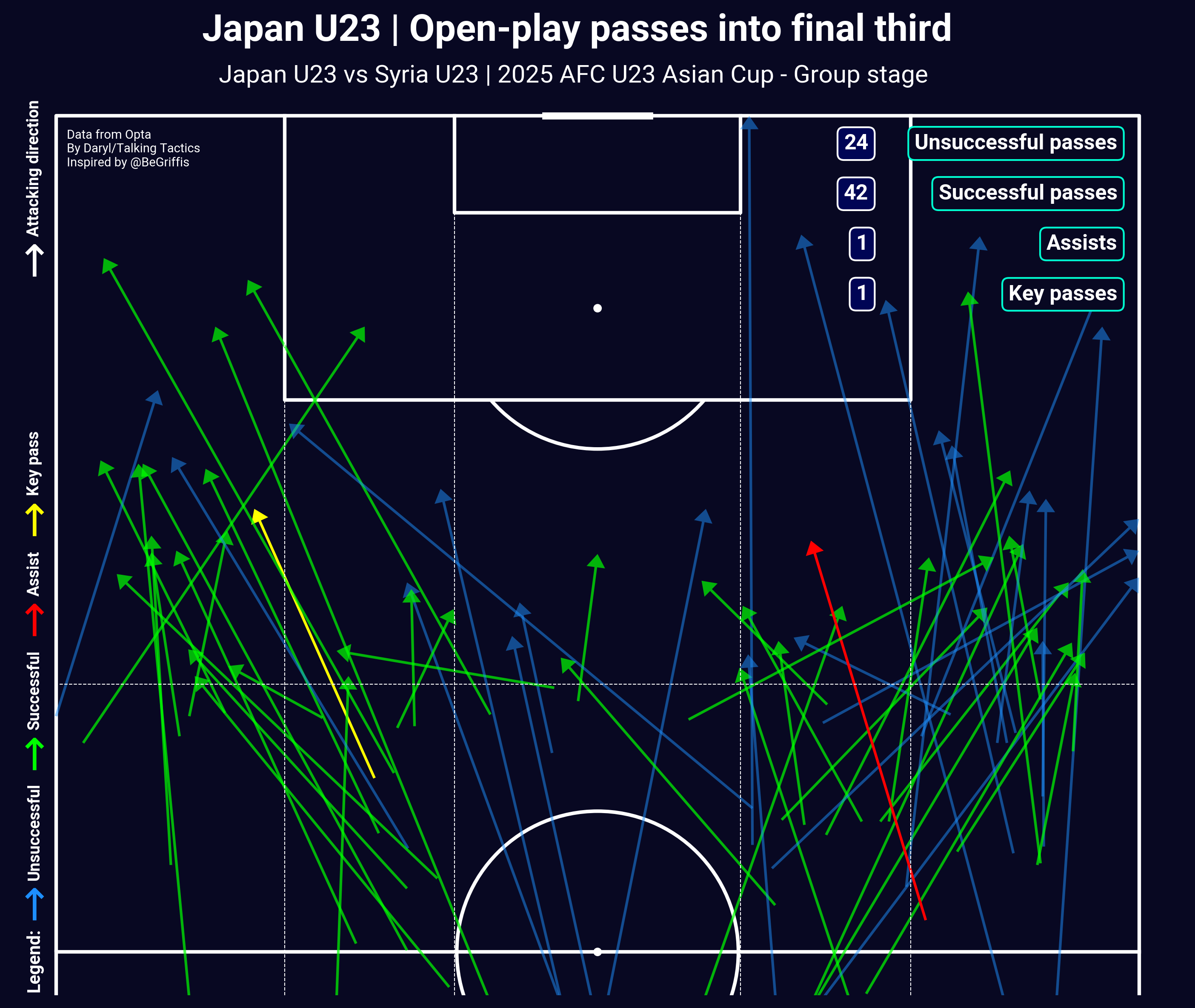
Having both the full-back and winger near the touchline also stretched Syria’s 4-4-2 defensive block and created a lot of spaces in between the lines and also in between the Syrian defenders. Both Ozeki and Sato made very good use of those spaces by making constant runs into the half-space areas to receive the ball from the wide players and continuing the team’s progression into Syria’s defensive third. Those runs were also used to attack the penalty box, which left them in very good goal-scoring positions, and they definitely did not put those opportunities to waste with Sato scored two and assisted two, one of them was for Ozeki to open the score.


But as dangerous as Japan were when they had the ball, they could have scored a few more if not for the performance of Syria’s keeper Sarraf. Yes, he conceded five goals and made the wrong decision to rush out for the ball that ultimately conceded the penalty for Japan during the added time. But he also came up with a few important saves to keep Syria in the first half and only went into the break with a one-goal deficit. The team’s downfall in the second half probably did not help Sarraf because he received little to no help from the defence in stopping Japan’s attacks as Syria tried to push for a goal or two. So, I think he also deserves a bit of credits for what he was able to do to keep Syria in the game.
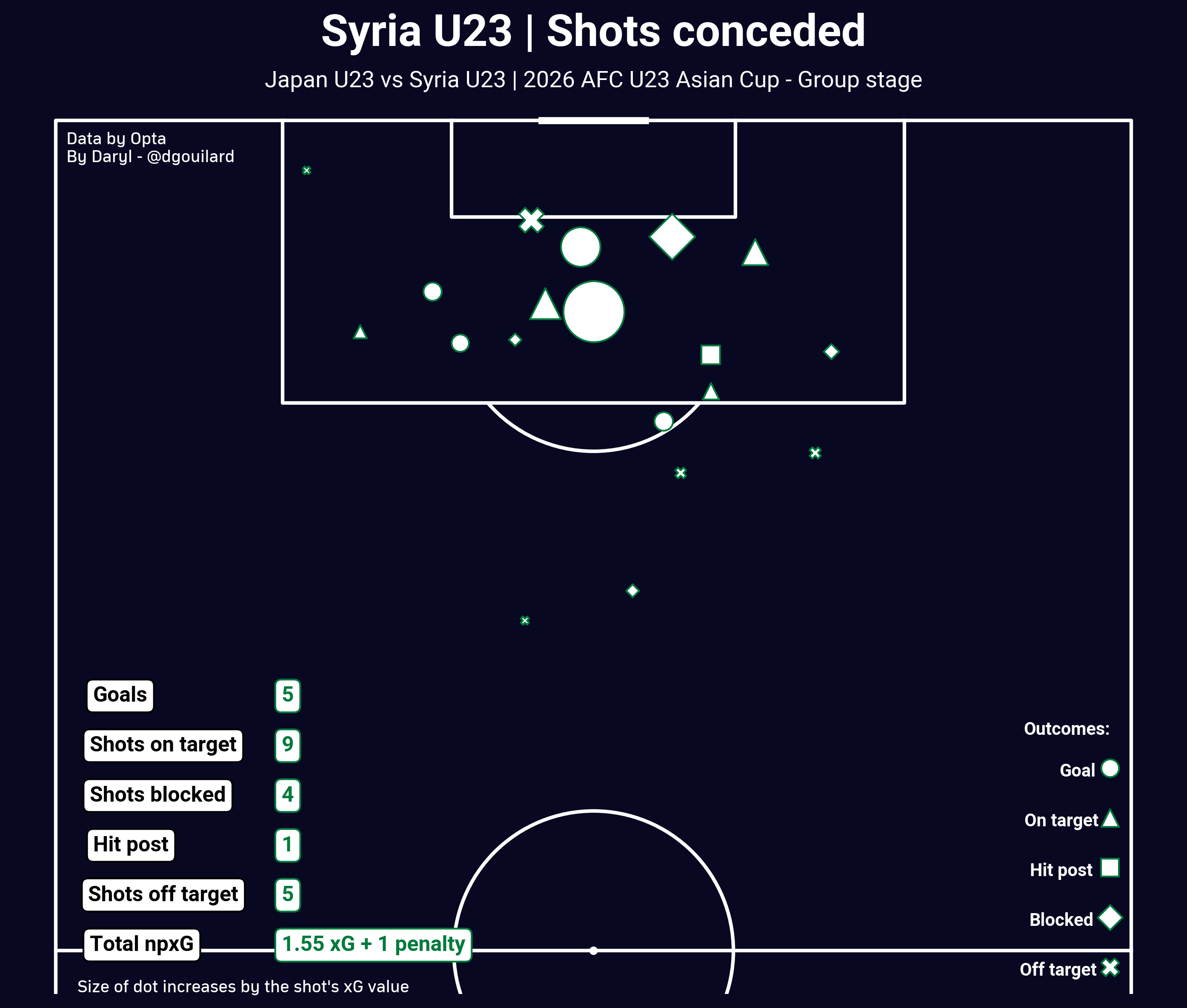
Probably a single criticism from me about this match was Japan’s striker #9 Nwadike’s performance. At first glance, he definitely looked like he had the physicality to be the out-and-out #9 that Japan had been craving for to lead the line, and that was their intention for playing him up front. Yet, during the match, I thought he looked very out of depth and could not link up with the rest of the team at all. When he was presented with a few chances to score, he wasted all of them and could not take the time to polish those chances better or be in a slightly better position to receive the ball. When Japan tried to use long passes from goal kicks to target Nwadike, he could not win the ball in the air or at least allowed the team to win second balls.
Overall, it was a disappointing performance from Nwadike. But…granted, he is still playing in Japan’s university system and has not signed with any professional club, which explains why he felt like at a different quality compared to the rest of the squad who have been playing for J1 and J2 clubs. I’m only criticising his performance against Syria but I also saw a bit of what he could do, so I won’t rush into judging him straight away.
This performance definitely concreted Japan’s position as the outright favourite to win this year’s tournament and retain their title. With a player core that have played with each other last year at two U20 tournaments along with a few new faces, their team cohesion was on show against Syria with slick passes, small and quick combinations, and their ability to cover for each other. I have nothing much to say about Japan other than I’m excited to see more from them throughout the tournament!
South Korea 0-0 Iran
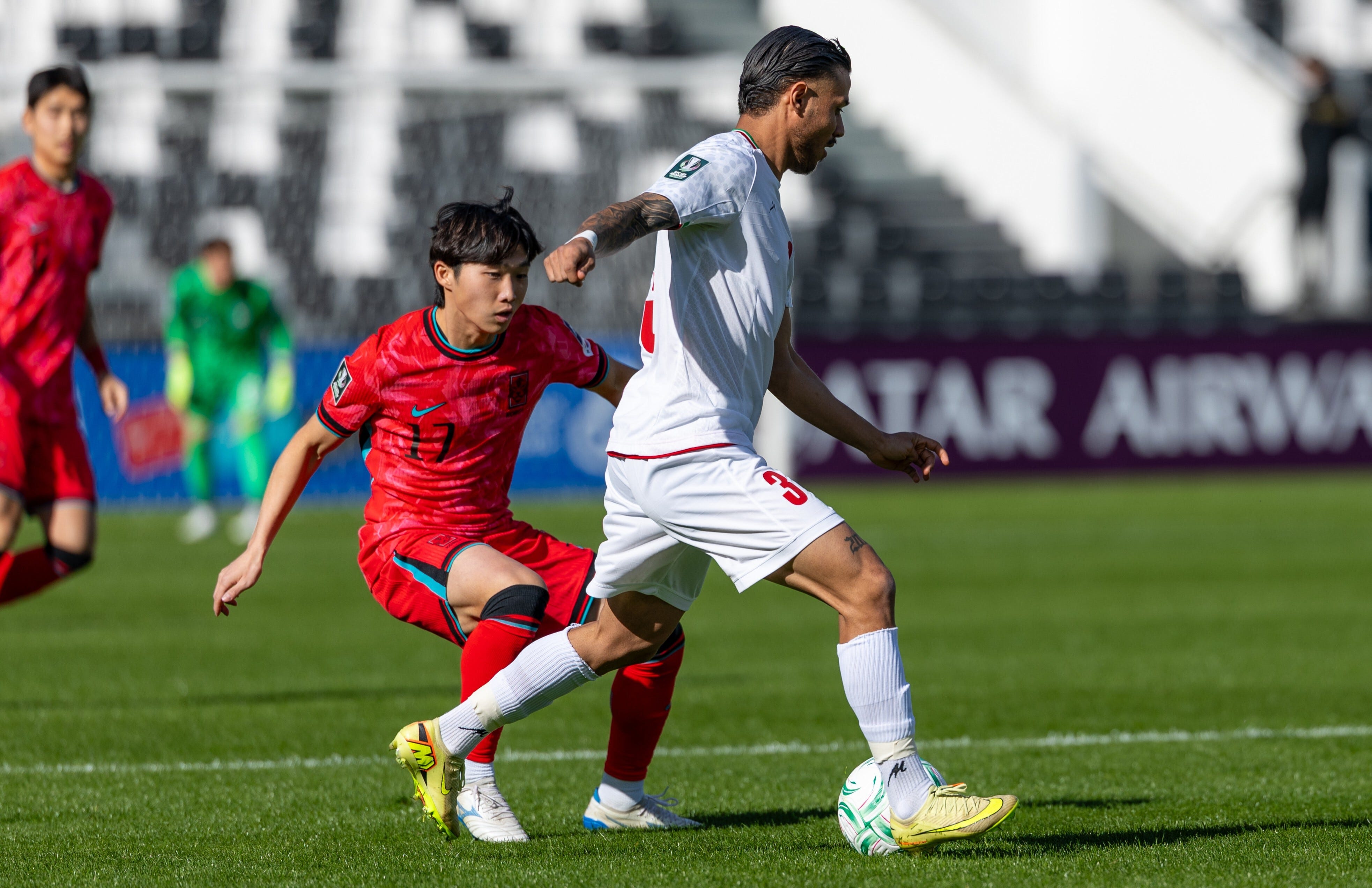
Having two matches scheduled at the same time is probably a very poor scheduling decision from the AFC, but alas, South Korea were/are now scheduled to play at the same time with Japan and that makes my task a lot harder. But while Japan delivered really good attacking football against Syria, I came away from the clash between South Korea and Iran fairly disappointed since both teams fell short of my expectation as two of the strongest teams in the tournament.
One of the major reasons why I was disappointed about the match was that it was a very stop-start affair due to players making aggressive challenges towards each other and injuries happened every 15 or 20 minutes. It probably prevented both teams from finding their own rhythm and took control of the game, and also prevented both teams’ key players from doing their own magic. There were a few occasions where it was possible to see a glimpse of what they could do, but overall, I don’t think anyone actually left a huge impact on the match.
Amidst all of that, I was still fairly impressed with how South Korea approached this match, particularly when they did not have the ball. Using a somewhat similar pressing approach to Japan’s, South Korea pressed their opposition whenever the ball was in Iran’s defensive third. Their press was intense and aggressive, with players looking to chase the ball down and guided Iran to play the ball out wide, where they also could create overloads and made tackles to recover possession.
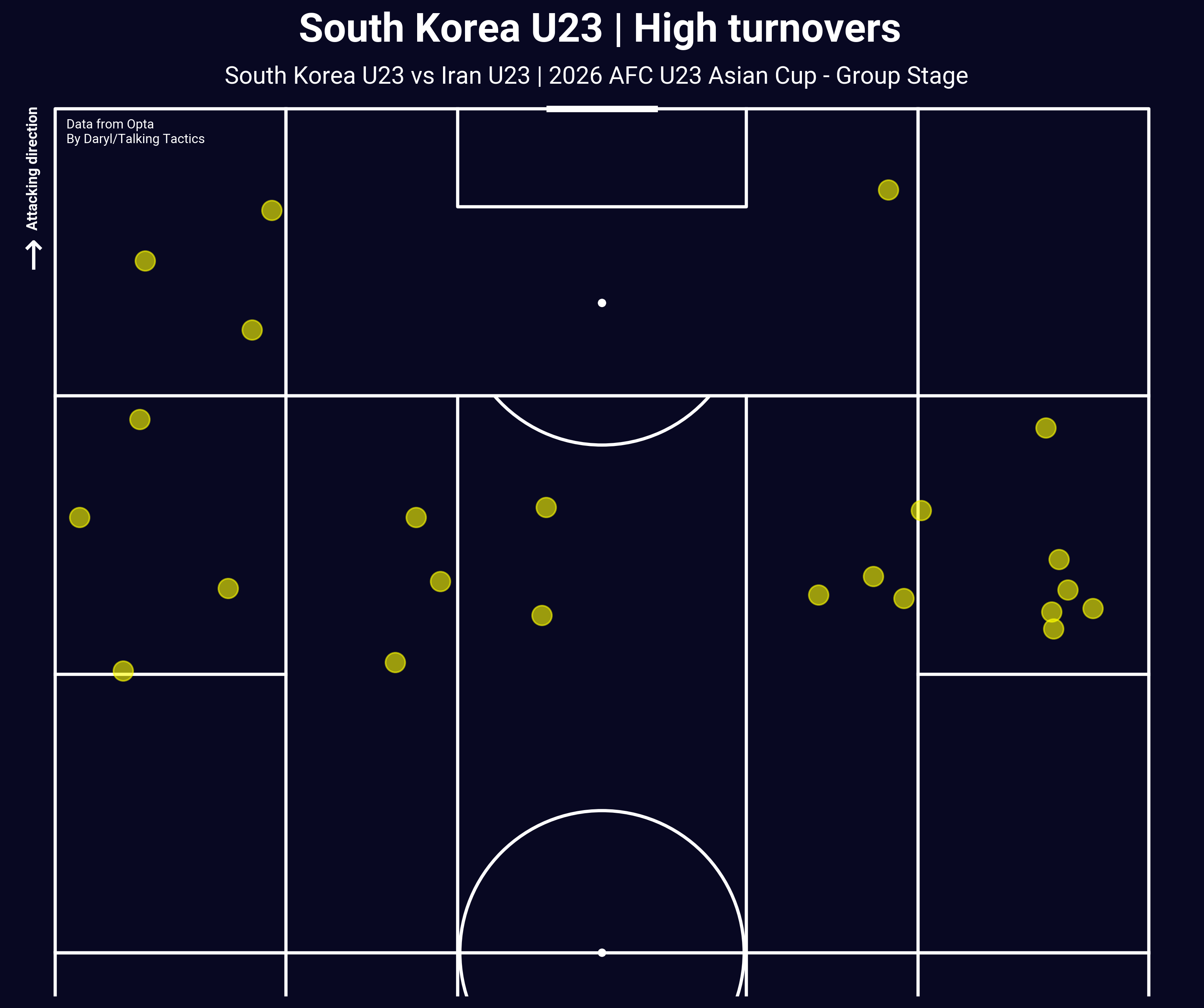
They were very successful with their press, so successful that their high turnovers might have generated more attacking chances for South Korea than their settled possession sequences. Iran’s lack of build-up ideas probably helped with that too; because whenever they had the ball in their own half, the defenders, keeper, and midfielders could only pass the ball among themselves while hoping that one of South Korea’s two flanks would open up or their right winger #10 Mohammad Hosseinnejad would be unmarked to receive the ball.
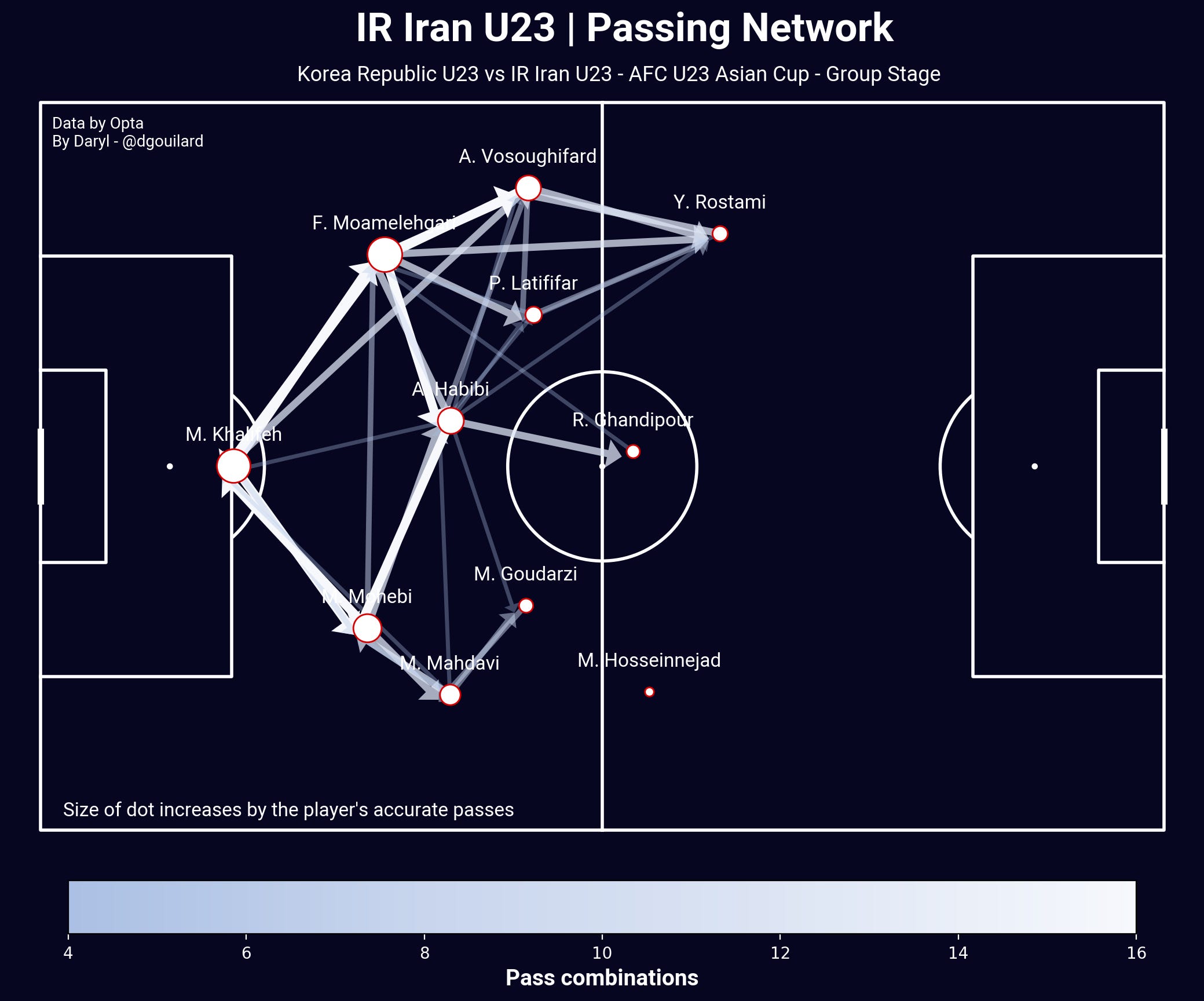
But as good as South Korea’s press was, they were not able to capitalise on those high turnovers to create more dangerous chances to at least put Iran’s goal under threat. The fact that they only had a single shot on target in the entire game probably said enough about South Korea’s attacking inefficiency, and drilling deeper into the chances that they had doesn’t make the situation any better. They relied heavily on getting the ball wide to the wingers, who did have a bit of impact thanks to their dribbles, but their crosses into the box were not good enough to put their strikers into a good goal-scoring position.
The same can be said about Iran’s attacking chances, though I thought they came a bit closer thanks to the counter-attacks that they had by winning the ball from South Korea inside of their own half. With South Korea’s preference to commit numbers forward for their attacks, they only left the two centre-backs back home to defend against counter-attacks and Iran was able to make use of that. But as Iran got into the final third, their wing reliance also backfired with South Korea quickly regrouped and overloaded the box, making it a lot harder for any Iranian attackers to connect with the crosses coming into the box.
As much as I wanted to find something positive to talk about the match, the overall picture was that there were so many reasons for why both teams failed short of most people’s expectations. With Uzbekistan still to play for both, I’m curious how will the result of this match affect the final standings after the third round of the group stage, and whether any team will look back at this regretting about not doing enough to get more than a single point.
Uzbekistan 3-2 Lebanon
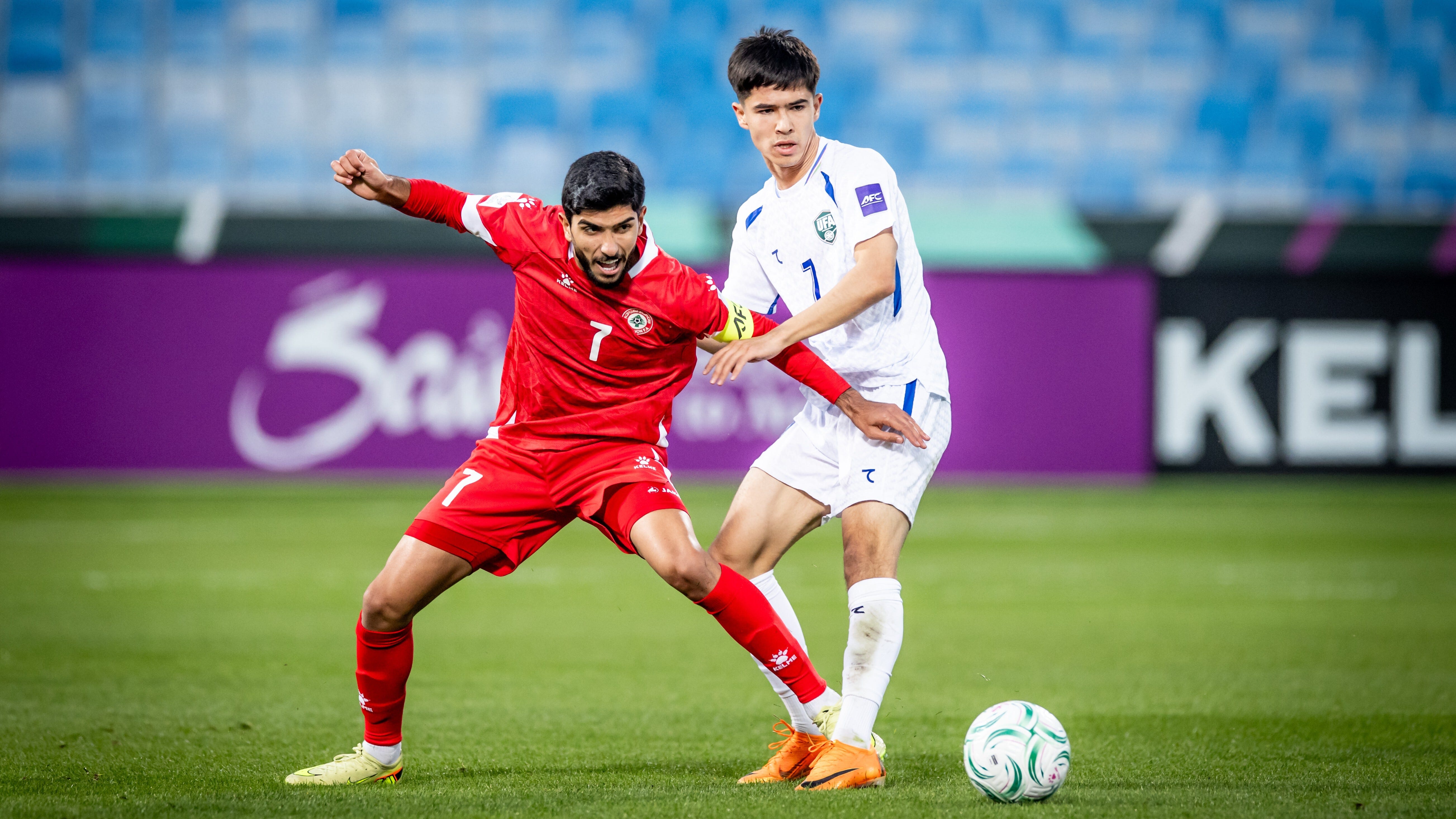
Personally, I was quite excited for this clash because this (and the tournament as a whole) was a good opportunity to check up on Uzbekistan’s progress with their ever-improving youth development system and spot any potential players who might be on the plane to the US in the summer. Lebanon are also an unknown factor in this year’s tournament, they have every chance to be a dark horse and create some surprises along the way, including upsetting Uzbekistan in their U23 Asian Cup debut match.
That seemed to be the case during the early minutes as both teams came out with a positive gameplan, but that was quickly shut down by Uzbekistan, who took control of the game through their high intensity playing style and forced Lebanon back into a defensive mentality for the majority of the match. When they had the ball, they never looked like wanting to slow the game down or took a bit of a breather, thus allowed Lebanon to resettle into their defensive shape and made the task of breaking their 4-4-2 block down much tougher.
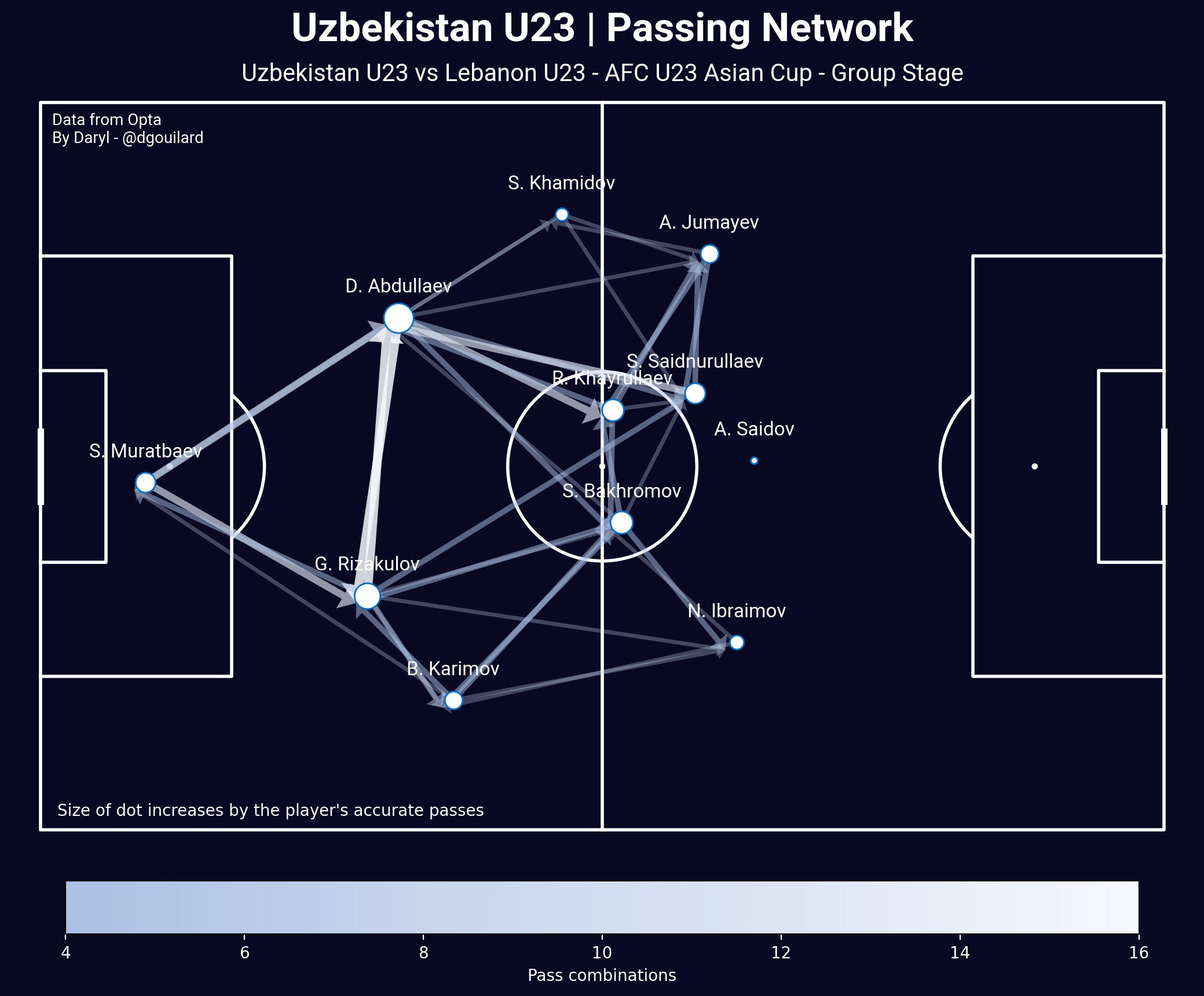
By constantly moving the ball and looking forward with every passes, Uzbekistan embraced the chaos and used that to their advantage to create plenty of scoring chances. Through the use of a lot of off-ball runs from their midfielders and wingers, the Uzbek players opened up plenty of spaces in between Lebanon’s defensive shape to pass the ball through and progressed into the final third with ease. They were also quite wing reliant and created plenty of passing triangles in order to make the progression phase a lot easier. It probably also helped that the Uzbek players looked to have very good chemistry with each other and they worked off and supported each other very well.
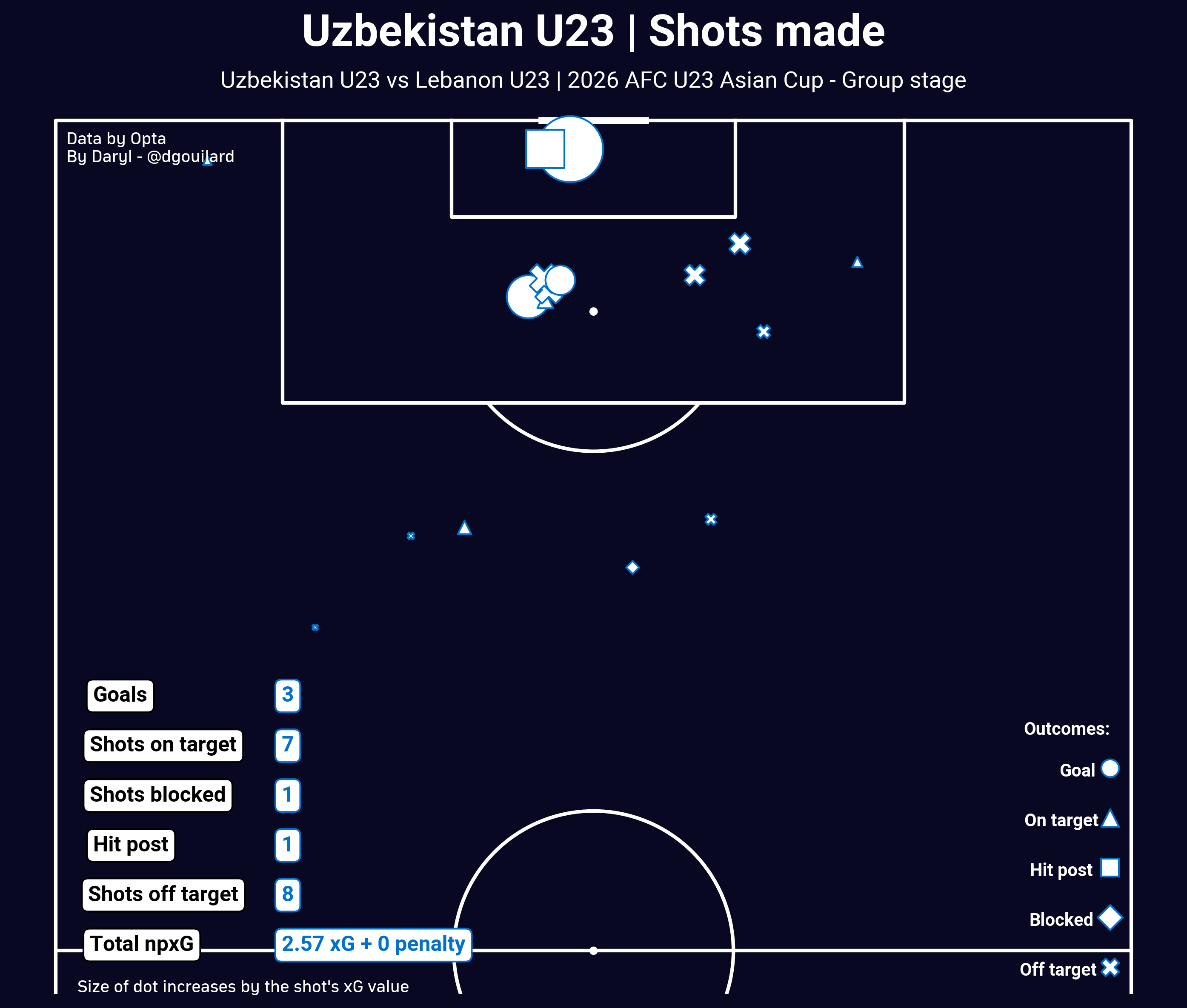
But as good as their build-up was, Uzbekistan initially did not enjoy a very good spell in front of goal. Their early chances felt quite rushed as their attackers usually had more time to control the ball and the shot, yet they just opted to take the shot right after receiving the ball and ended up firing it over the bar. Their opening goal was an immediate contrast to their previous chances up until that point, with a shot that was aimed towards the goal being parried by the Lebanese keeper straight into Uzbekistan’s right winger #17 Amirbek Saidov’s path for an easy rebound.
Saidov and his teammates could have easily scored more than a single goal in the first half and had even more opportunities to put the game to bed in the second half. If the players could have taken a bit more time on the ball or anticipated the ball a bit better, they would have been in better goal-scoring positions to put the ball into the back of the net. Nonetheless, that did not seem to affect their performance in the second half as they came out from the break with high spirits and scored two more fairly well-worked goals.
Lebanon only seemed to get into the game after they went 3-0 down and made three changes at the 61st minute. Probably with the mentality of having nothing to lose, they pushed forward more often and played a bit faster than they did in the first half, and that actually helped them got closer to Uzbekistan’s goal.
Not that they did not create any chances in the first half, but there was a sense of cautiousness in their approach to moving the ball forward and that either allowed Uzbekistan to regain possession fairly easily or Lebanon created a fairly harmless chance. Their first goal, which was also #19 Leonardo Shahin’s first of his two goals, was a good example of what they were capable of creating when they actually played with a more positive approach.
This match was also a match of individual brilliance that saw Uzbekistan’s central midfielder #7 Sardorbek Bakhromov and left winger #11 Asilbek Jumayev left a huge impact on the match. Bakhromov was a key cog in Uzbekistan’s midfield as he appeared both very deep to offer a passing option for the centre-backs and very high up the pitch through his off-ball runs to be the third-man in a passing triangle. His technical ability was very good as it allowed him to receive and control the ball in tight spaces, evaded the pressure from the Lebanese players, then turned to face forward almost immediately. His off-ball runs from the middle of the pitch into the half-spaces were also utilised to its maximum as it allowed Bakhromov to be in advanced positions to create chances for his teammates.
Bakhromov’s teammate in front of him, Jumayev, also possessed a similar skillset and, like most wingers that I have covered in this article, was very confident in taking the opposition’s defenders on. While his dribbles and skills caused a lot of troubles for Lebanon’s right-back, he lacked a bit of composure to time his passes and crosses a bit better to add a bit more threat to the chances that he created for his teammates. But hopefully those aspects will come over time for Jumayev as he gains more playing time and experiences with both his club and country.
Another team who have started this tournament in a very strong position and put themselves into the conversation for one of the favourites to win the title, Uzbekistan are showing people why they should not be ignored any longer. Having won the title in 2018, a new generation of the White Wolves is eager to replicate that feat and potentially win a spot on the plane to the US in a few months time. For Lebanon, I think they are still a fairly unknown factor having chose not to show everything that they could do against Uzbekistan. The odds are once again stacked against them when they face Iran and South Korea, but I think it’s still too early to count them out just yet.
Australia 2-1 Thailand
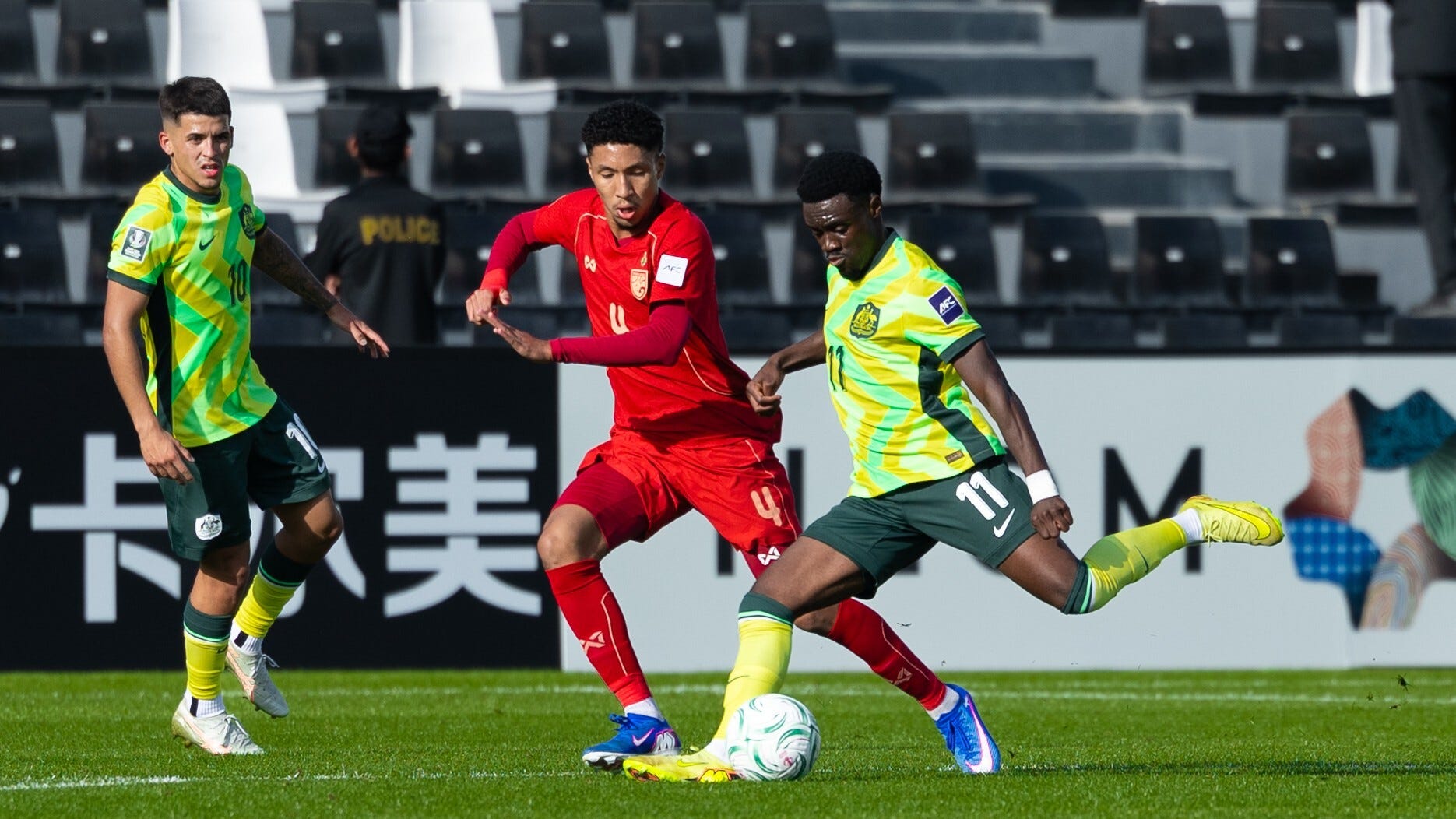
Many have said a red card can turn the game on its head very quickly, and while that statement have become less and less true nowadays due to tactical setups and planning, it doesn’t mean that it’s not happening anymore. The clash between Australia and Thailand might be a good example of that given how different the game state was during the first 10 minutes and the remainder of the match.
A quick glance at both teams’ lineups would suggested Australia to be the clear favourites due to most players in the squad being regular starters or getting frequent minutes in the A-League Men. But Thailand were actually the team who started out stronger and even looked to control early possession along with creating a few chances, and they were eventually rewarded with a very early, fairly scrappy goal from a corner situation. That advantage quickly went away when left-back #21 Phon-Ek Jensen made a tackle that very deservedly be awarded with a red card.
Up until Jensen’s red card, Australia looked like they were the second-best team for the majority of the time. Even though they did create a few chances here and there, the fact that Thailand started the match very positively probably caught them by surprise. They also had to do a bit more defending than they would have wanted due to Thailand’s plan of using long passes and through balls to look for runs in behind Australia’s defensive line. That plan persisted throughout the match and helped the Southeast Asian side created a few dangerous counter-attacks that they should have capitalised, if not for their attackers’ lack of composure and willingness to shoot from anywhere and at anytime they had the opportunity to do so.
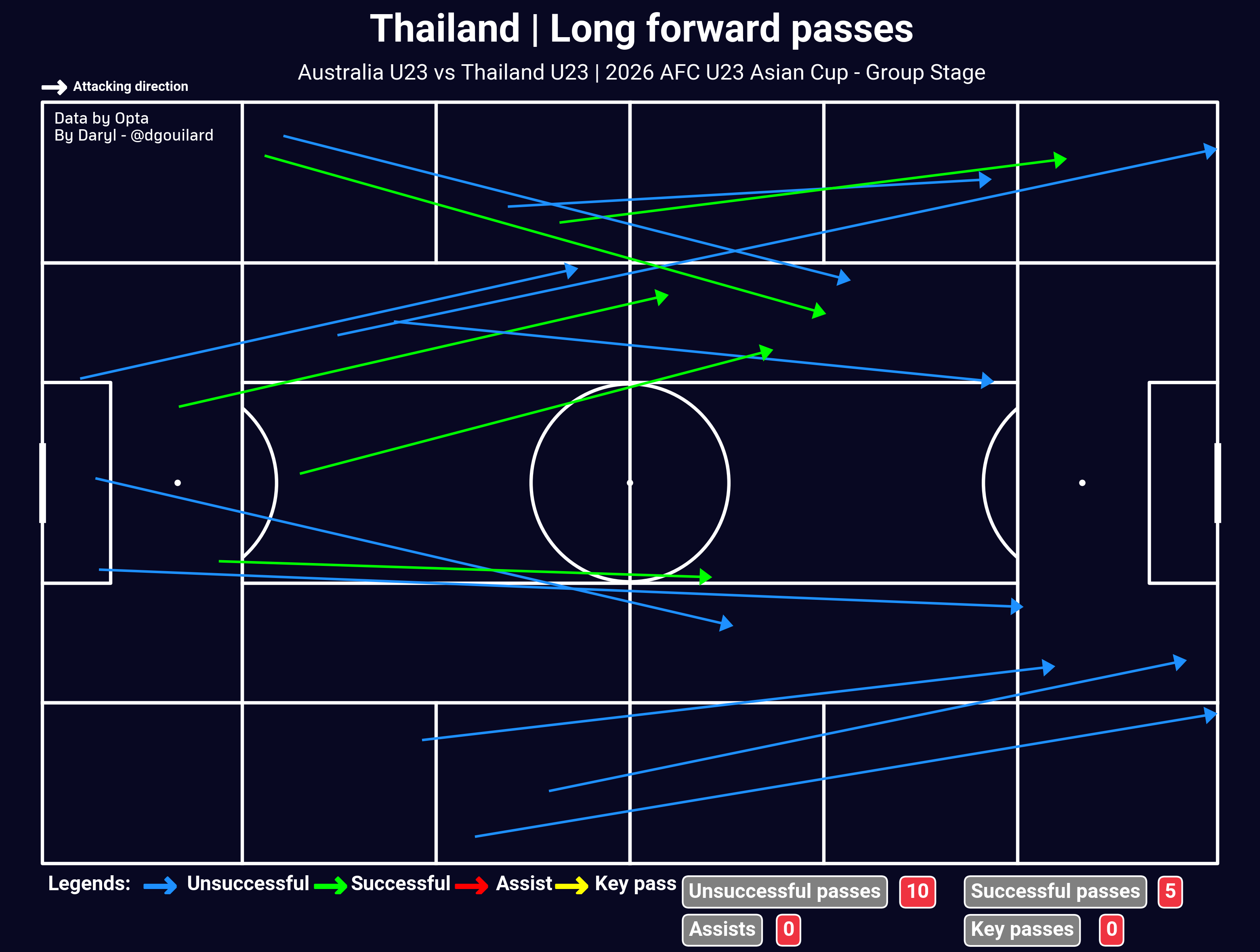
It was probably not a good sign that even with a man advantage, Australia still left the door open for Thailand to find their way back into the game. If not for Thailand’s wastefulness in front of goal, the scoreline could have been very different. I can also say the same about Australia’s attacks honestly, because with the attacking power that they had up front, they could have and should have scored more than two goals, which one of them came from a penalty situation that was very debatable.
Winger #11 Yaya Dukuly and attacking midfielder #10 Aydan Hammond did leave some impacts on the game with their confidence to dribble and get past the Thai defenders with ease most of the time. But for Dukuly, those individual efforts only resulted in a few fouls drawn, including the penalty that central midfielder #14 Ethan Alagich converted, but not much else. Hammond did a bit better as his dribbles into the box drew the attention of the few Thai defenders, which allowed him to set up a couple of good goal-scoring chances for Alagich and striker #16 Luka Jovanović that were unexpectedly missed by the Adelaide United duo.
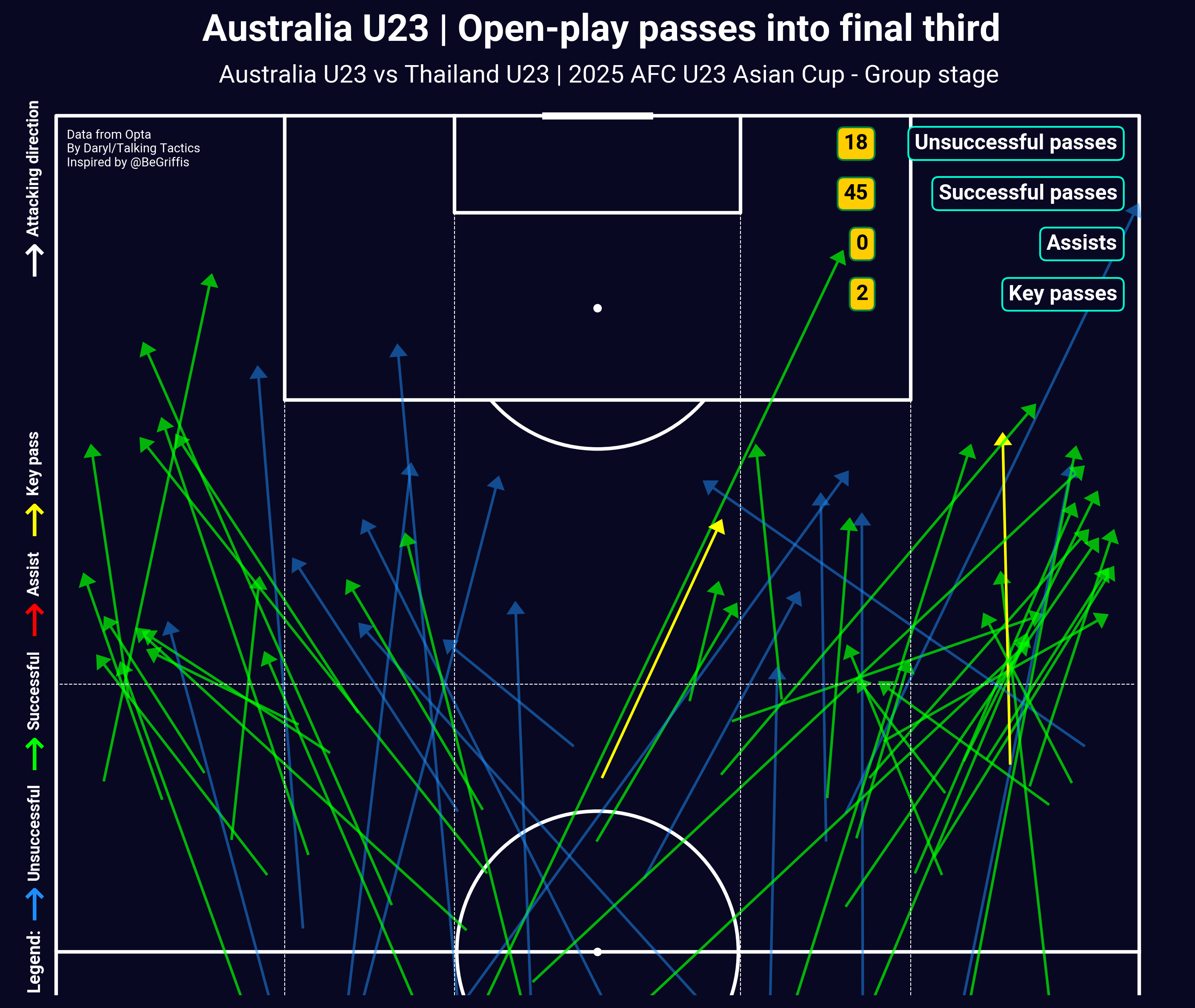
Meanwhile, Australia’s remaining winger #23 Mathias Macallister was the one player who took the match into his own hands and made it his own. Initially started on the right-hand side, he was left isolated due to Australia’s preference to attack down Dukuly and left-back #2 Aidan Simmons’ left wing. But the decision to swap Dukuly and Macallister’s positions after Thailand’s red card created more variety in how Australia attacked and also put the Sydney FC youngster in a position where he was more comfortable with.
Before scoring this worldie here, Macallister already had two attempts where he executed the exact same move. He would receive the ball out wide, then attempted to cut inside on his preferred right foot while also baited the Thai defenders to commit to a challenge and opened up the space for himself to shoot. The only difference between the first two chances and this worldie is that the first two were taken outside of the penalty box, which gave the Thai keeper a bit more time to adjust his positioning and save the shot fairly comfortably. This one, however, was directly inside of the box and the ball was curved to the far angle of the goal, leaving little to no chance for the Thai keeper to save it.
Once again, I’m giving credits to the losing team’s keeper and I think the Thai keeper #23 Chommaphat Boonloet deserved a bit of attention as well. While there was not much that he could do to stop Macallister’s goal, he did do a whole lot more afterwards to save a few of Australia’s dangerous chances and kept his team in the game. Even when Thailand switched to a back five after the red card, their defence was breached multiple times and conceded plenty of dangerous chances that could have made the scoreline a lot worse than it is. But Boonloet and centre-back #5 Nathan James showed up at important moments to dampen the damage.
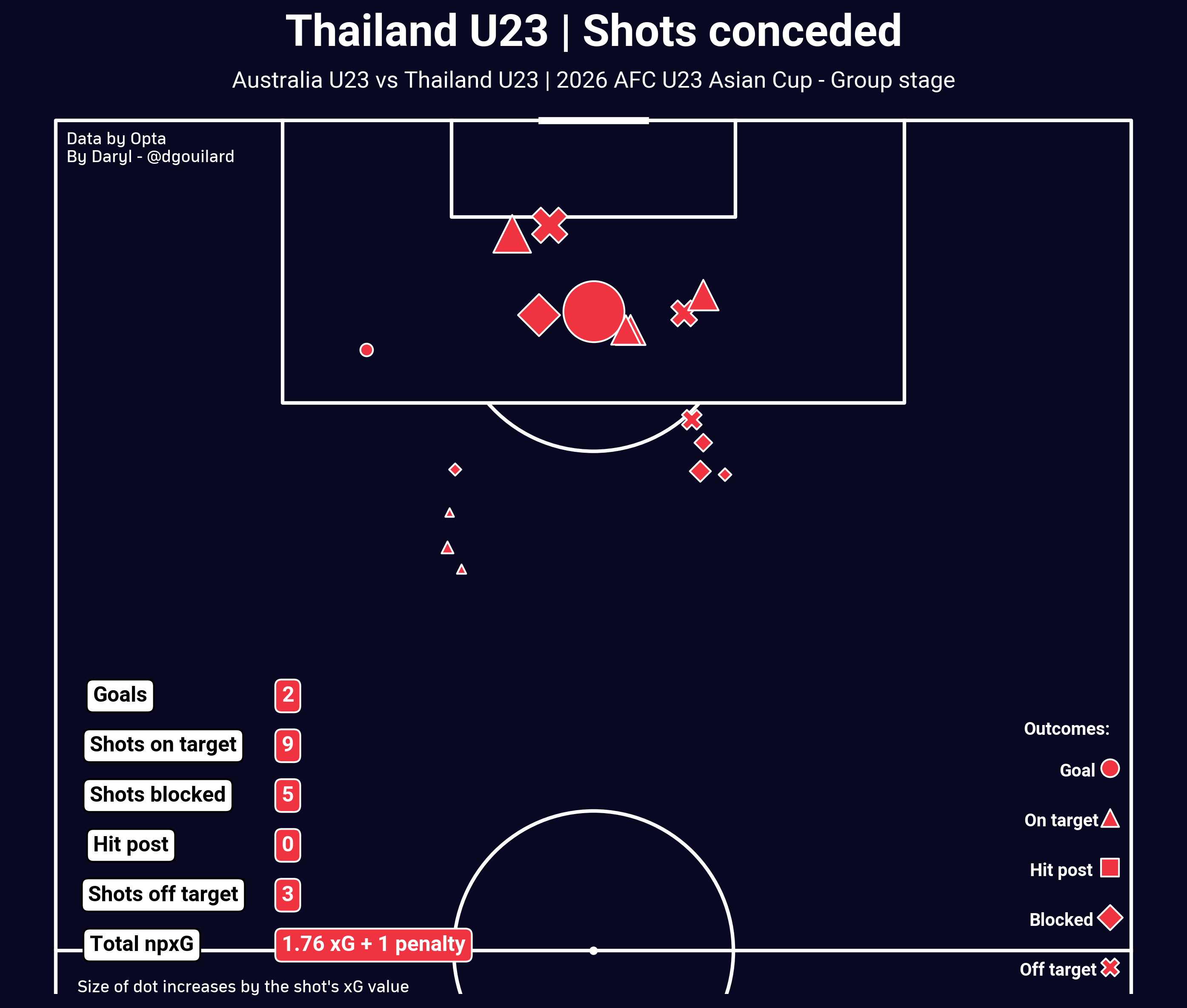
While they did end up with all three points, Australia only had themselves to blame for not scoring more goals that could potentially help them with their goal difference. But the positives that they showed in this match should give them some confidences heading into the remaining two matches if they are to realise their goal to advance further into the tournament. The same goes with Thailand, they did leave a good impression even though they were down to 10 men, and it is good that Iraq drew China in a goalless match, which should still give them a fighting chance for qualification into the next round.